
BlackRock’s Panama Canal Acquisition: Larry Fink’s Strategic Move Amid Geopolitical Tensions
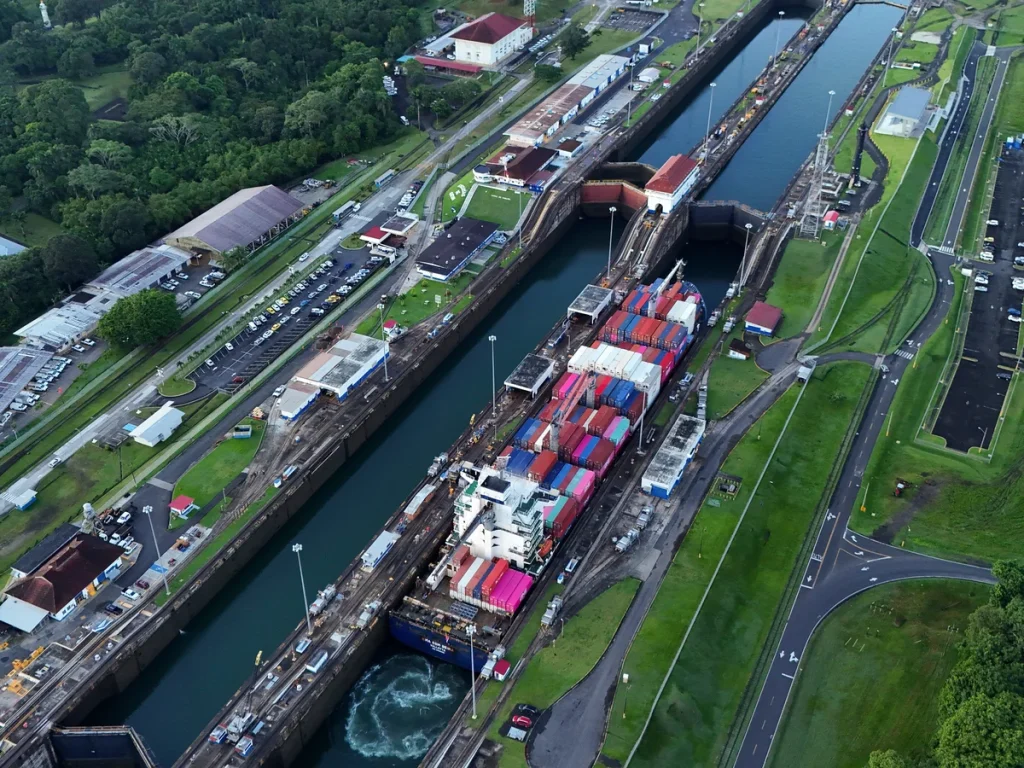
I once thought markets ran on pure economics. Then I watched infrastructure deals reshape power dynamics across continents. Truth is, whoever controls the pathways controls the future. BlackRock just grabbed the world’s most strategic waterway, and nobody’s talking about what it really means.
The Silent Power Play
Money moves quietly. BlackRock positioned itself at one of the world’s most critical chokepoints last month. Larry Fink never makes random moves on the global chessboard. This Panama Canal acquisition reveals deeper currents flowing beneath surface-level financial news.
Most investors chase quarterly earnings reports while missing tectonic shifts in asset ownership. BlackRock already manages $10.5 trillion. They don’t need more paper wealth. They want control over physical bottlenecks where real power resides.
Nations fought wars over this canal for decades. Now a Wall Street firm owns significant stakes without firing a shot. Capital conquered what armies couldn’t. Remember this pattern.
Panama’s Strategic Significance
Ships carrying $270 billion in goods pass through the canal annually. China wanted control here for twenty years. The United States fought to build it. Now Wall Street owns a stake.
Geography still matters in our digital age – perhaps more than ever. Financial markets exist as abstractions. Physical chokepoints remain stubbornly concrete. When drought hit Panama last year, global shipping routes scrambled. Container prices spiked overnight.
BlackRock spotted vulnerability where others saw only inconvenience. Control the canal, influence global trade. This equation works whether measured in dollars or geopolitical influence. Smart investors recognize when financial assets transform into strategic leverage.
Larry Fink’s Evolution
His evolution didn’t stop with accumulating assets under management. Money alone grows boring past certain thresholds. He wants to shape how societies develop, not just profit from their existence. Physical infrastructure creates this leverage.
Fink transformed from financial player to world-shaper gradually. First through proxy voting power across thousands of companies. Then through direct letters to CEOs demanding climate action. Now through owning the actual infrastructure that makes global commerce possible.
This pattern repeats throughout history. Financial power eventually seeks physical power. The invisible hand wants to grasp something tangible. BlackRock’s Panama move comes from this deeper human drive, not just portfolio diversification.
The Climate Change Calculation
Panama suffered severe drought recently. Water levels dropped to record lows. Ships paid premium fees or diverted elsewhere. Smart capital sees opportunity in crisis.
Fink understands climate volatility better than most. His annual letters warned about it for years. Now BlackRock positions itself to profit from the very disruptions they predicted.
Water scarcity creates leverage. Less water means fewer ships. Fewer ships mean higher tolls. Higher tolls mean greater returns on infrastructure investments. Climate change doesn’t create winners and losers randomly – it rewards those who position themselves at critical junctures beforehand.
I’ve watched countless investors miss this fundamental truth: physical assets beat financial instruments during system shocks. BlackRock applies this principle at global scale.
China’s Response Options
Beijing wanted this asset. Their Belt and Road Initiative targeted strategic chokepoints worldwide. Panama represented a crown jewel in their strategy. Now they must respond.
China already pumped billions into alternative shipping infrastructure. Their Nicaragua canal project stalled but might revive now. When great powers compete, ordinary investors get crushed between them unless they understand the dynamics.
I predict unusual Chinese investment patterns near alternative trade routes within twelve months. Money talks truth while diplomats speak distraction. Watch capital flows, not press releases.
The game gets more interesting when players must reveal their next moves through actions, not words. BlackRock forced China’s hand. Strategic patience suddenly costs more than strategic response.
Resource Wars Begin With Infrastructure
History teaches one consistent lesson: resources don’t matter if you can’t transport them. Nations fought over canals, railways, and shipping lanes for centuries before fighting over the resources themselves.
Today’s version uses capital instead of cannons. The players wear suits instead of uniforms. But the strategic logic remains unchanged.
I’ve studied how wealth transfers across history. Control points always matter more than endpoints. The toll collector outlasts both buyer and seller. BlackRock applied ancient wisdom to modern markets.
Most investors focus on commodities themselves – oil, copper, lithium. Wiser investors focus on the infrastructure that moves these commodities. The former chase price fluctuations. The latter build lasting wealth through control positions.
Water routes still trump land routes on cost despite all our technological progress. This fundamental reality drives BlackRock’s strategy more than financial models ever could.
Sovereign Wealth Fund Competition
Old money moves slowly. Committees debate while opportunities vanish. Fink’s team makes decisions faster than sovereign wealth bureaucrats can schedule meetings.
I saw this pattern repeat with tech startups first. Speed beats size. Now it happens with trillion-dollar infrastructure plays. American capital still outmaneuvers state-backed competitors despite all the talk of decline.
These sovereign funds manage generations of wealth. They think differently than quarterly-focused Wall Street. Yet BlackRock outflanked them on long-term strategic assets. This says something important about institutional decision-making that few discuss.
The funds that lost this deal will regroup and target similar assets elsewhere. Watch Malaysia, Indonesia, and Egypt’s waterways next. The pattern repeats until everyone secures their position in the new resource chessboard.
The ESG Contradiction
Fink champions environmental investing in public letters. Then buys infrastructure that increases shipping capacity and emissions.
I don’t fault this contradiction. I recognize it. Words satisfy public relations. Actions satisfy fiduciary duty. The gap between them reveals actual priorities.
BlackRock manages retirement money for millions of teachers, firefighters, and ordinary workers. Their primary obligation remains financial returns. ESG makes good marketing but questionable strategy during resource competition.
Smart investors watch what powerful people do with their capital, not what they say at conferences. Panama tells us more about Fink’s actual worldview than a dozen climate manifestos.
This tension between stated values and capital allocation exists everywhere in markets. Those who pretend otherwise lose money consistently.
Panama’s Economic Dilemma
Panama needed this deal. Their economy depends on canal revenues. Droughts threatened their national budget. BlackRock brought immediate capital while promising operational improvements.
But selling strategic assets creates long-term dependency. Short-term financial relief versus long-term sovereignty. This trade-off shapes development economics everywhere.
I’ve watched smaller nations make this bargain repeatedly. The money solves immediate problems while creating invisible constraints on future options. The constraints only become visible during crisis moments.
Panama’s leaders made a rational choice with limited options. BlackRock offered better terms than Chinese alternatives. The transaction benefits both parties on paper. Yet power dynamics shift permanently when control points change hands.
Nations everywhere face similar choices as infrastructure ages while budgets tighten. This pattern guarantees more strategic assets will transfer from public to private ownership over the next decade. Position accordingly.
The New Colonialism Debate
Some call this financial colonialism. I call it evolution of power systems. Labels matter less than mechanics.
European powers once sent gunboats to secure trade routes. Today BlackRock sends wire transfers. Different methods, similar outcomes. Control flows from local to global entities either way.
Nations voluntarily sell strategic assets now. Force became unnecessary when debt did the job better. Panama chose this deal. Nobody forced their signature. Yet economic necessity constrains choices as effectively as military threats once did.
I’ve studied wealth creation for decades. Control of trade routes creates more sustainable wealth than manufacturing or resource extraction. This knowledge drove colonial expansion before and drives investment decisions now.
The world accepts BlackRock’s move because it happens through markets rather than conquest. The perception difference matters politically while the strategic outcome remains nearly identical.
Military Implications Nobody Discusses
The US Navy maintains effective canal access regardless of ownership papers. National security overrides corporate rights during conflict.
Pentagon planners likely approved this acquisition behind closed doors. Private capital now advances national interests where government action would create diplomatic problems. Clever arrangement for all parties except competing nations.
China loses twice here. Their canal access depends on American goodwill during any future conflict. Their own acquisition attempts got blocked while BlackRock’s succeeded. The message couldn’t be clearer about whose capital moves freely.
The military significance exceeds the financial returns. BlackRock’s investors get stable yields while America secures strategic assets. Perfect alignment that will repeat elsewhere soon.
The Fund Manager’s True Motivation
Fink could retire tomorrow with more wealth than he could spend in multiple lifetimes. He continues building BlackRock for reasons beyond money.
Legacy drives billionaires more than additional zeros in their accounts. Creating lasting impact on global affairs satisfies deeper human needs than consumption ever could.
I’ve known wealthy people who reached this transition point. Money becomes a scorecard rather than a goal. Influence over systems becomes the actual objective. The game changes entirely.
Fink uses financial engineering to secure physical infrastructure that shapes global trade for decades. The capital deployed matters less than the position secured. This thinking separates truly wealthy individuals from merely rich ones.
Understanding this motivation shift explains moves that seem financially suboptimal initially. The returns sought aren’t purely monetary anymore. This insight helps predict future actions better than spreadsheet analysis ever could.
Future of Strategic Assets
Expect more infrastructure privatization worldwide. Governments can’t afford maintenance costs. Investors need inflation protection. Perfect conditions for ownership transfer.
Water systems, ports, energy grids – all moving from public to private hands. The trend accelerates during economic stress. Nations solve short-term budget problems by selling long-term revenue streams.
I watch this pattern repeat globally. Greece sold ports during their debt crisis. India privatizes airports. Indonesia offers toll roads to investors. The pattern clarifies when viewed from sufficient distance.
BlackRock’s Panama play represents early positioning in this larger trend. They recognize where markets head before markets themselves do. This foresight creates outsized returns for patient capital.
Smart investors won’t fight this movement. They’ll align with it at appropriate scale. The privatization of critical infrastructure continues regardless of political resistance because financial reality forces it.
What Average Investors Should Learn
I built wealth by identifying points where value gets captured rather than created. Creation remains important but capture determines who profits. This principle scales from Panama Canal to neighborhood businesses.
Most investors focus on endpoints – production and consumption. Wiser investors focus on connection points between them. Less glamorous but more profitable over time.
The Panama acquisition reveals BlackRock’s worldview. Study it carefully. Apply its lessons selectively. Your advantage comes from understanding the game being played.
Action Steps
Watch for similar BlackRock moves in Mediterranean and Southeast Asian shipping lanes. Their acquisition pattern reveals future priorities before mainstream analysis catches up.
Smart capital follows these signals while maintaining plausible deniability. The first-mover advantage matters less than correct positioning for long-term trends.
I’ve consistently found that copying investment giants directly fails, but understanding their strategic thinking succeeds. Apply their frameworks at your scale rather than mimicking specific assets.
Infrastructure represents real value during currency debasement. BlackRock knows this. Their Panama move offers protection against monetary uncertainty while securing strategic position. Consider what assets in your reach offer similar dual benefits.
The world reorganizes around resource competition despite all our technological advancement. Those who secure critical pathways now will dictate terms later. This truth remains unchanged since ancient trade routes first shaped civilizations.
The Panama Canal acquisition tells us more about the future than a hundred economic forecasts. Larry Fink sees the world clearly because trillions in assets clarify rather than obscure vision. We should pay attention to where he places his bets, not for what he says about them.
