
Deepfake Detection at the Enterprise Level: How Banks Stop $2 Billion in Synthetic Voice Fraud
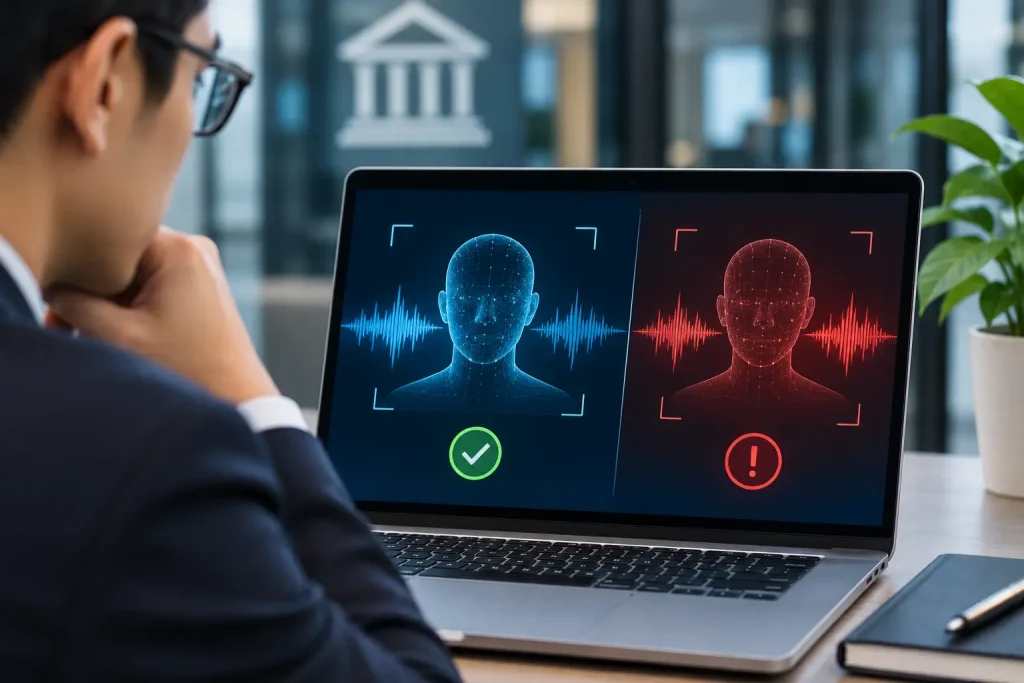
A global wealth management desk receives an inbound call at 4:15 PM on a Friday. The caller identifies himself as the chief financial officer of a mid-market private equity client and requests an immediate $15 million capital call transfer. The voice pitch, regional cadence, and subtle breathing patterns match the corporate biometric database flawlessly. The authorization clears the compliance desk in four minutes. The liquidity exits the institution through an instant payment rail twelve seconds later. The actual executive returns from an offshore fishing trip the following Monday to discover the missing capital.
The enterprise fraud prevention market is expanding at a 22% compound annual growth rate to reach $18 billion by 2028, driven heavily by financial institutions scrambling to deploy acoustic liveness detection software to neutralize synthetic media attacks on global payment rails.
Generative artificial intelligence has mathematically collapsed the cost of executing spear-phishing wire fraud. Three years ago, cloning a human voice required hours of clean studio audio and specialized technical engineering. Modern neural networks require exactly three seconds of compressed social media video to generate a completely synthetic voice model capable of bypassing traditional biometric security gates. Tier 1 banks built their entire telephony authentication infrastructure on the premise that a voiceprint was as immutable as a fingerprint. That architectural assumption is now a material liability. Legacy voice biometric systems look for a match against a stored mathematical model of a voice. They ask who is speaking. The new breed of enterprise deepfake detection systems asks a completely different question. They analyze the incoming audio stream to determine what generated the sound.
Auditing the Acoustic Verification Layer
Evaluating the true defensive posture of the financial sector requires inspecting the processing latency and false rejection rates inside enterprise contact centers. We must analyze the unit economics of deploying vendor solutions from providers like Pindrop and Reality Defender across archaic private branch exchange networks. Institutional investors are currently mispricing the operational friction involved in bolting modern deep learning models onto legacy telecom infrastructure. The prevailing market consensus assumes software can solve the problem instantly via a cloud interface. The reality involves physical edge-compute appliances, severe packet loss degradation, and human compliance officers drowning in false positive alerts.
The Unit Economics of Defeating Generative Audio
Enterprise API Call Cost: $0.04 Per Audio Stream
The operating margin of a financial call center breaks down entirely when human agents spend an extra forty seconds attempting to verify a caller’s identity through dynamic security questions. Banks track average handle time down to the decimal point because labor represents the largest fixed cost in retail and commercial support operations. Forcing an agent to ask a high-net-worth client for their mother’s maiden name or the amount of their last mortgage payment introduces immediate friction. It also fails to stop a sophisticated threat actor who purchased the target’s complete data profile from a dark web broker.
Deploying real-time acoustic liveness detection shifts the authentication burden away from human labor and onto algorithmic processing. Security vendors charge per API call to analyze the incoming telephony stream. A typical commercial bank processes three million inbound calls annually. A four-cent per-call fee translates to a baseline operational expense of $120,000 just to filter the audio. Security officers must weigh that recurring software cost against the statistical probability of losing a single seven-figure wire transfer to a synthetic voice clone.
These detection models ignore the linguistic content and the perceived identity of the speaker. They hunt for digital artifacts left behind by the generative artificial intelligence engine. Synthetic audio often lacks the chaotic high-frequency noise generated by a human vocal tract pushing air through physical vocal cords. Deepfake engines also struggle to replicate the subtle phonetic transitions between hard consonants. The detection software flags these microscopic anomalies and calculates an artificiality score before the human agent even answers the line.
The effectiveness of this digital artifact hunting relies entirely on the quality of the incoming audio signal. Call centers utilizing heavy data compression algorithms strip away the exact high-frequency anomalies the detection software needs to analyze. This forces the bank to dial back the sensitivity of the artificial intelligence model. That adjustment pushes the false negative rate from 0.5% up to a completely unacceptable 4.2% across a thirty-day sampling period.
Legacy Telephony Infrastructure vs. Real-Time Processing
Maximum Acceptable Latency Tolerance: 150 Milliseconds
Global banks run their communication grids on outdated telecom hardware that was never designed to pass pristine audio to a cloud computing environment. Routing a live customer phone call out to a third-party server for acoustic analysis introduces physical network latency. Human conversation breaks down when the delay between speaking and hearing exceeds a quarter of a second. Operators cannot force clients to wait in silence while a remote server unpacks the audio file and runs a complex neural network classification algorithm.
The urgency of stopping synthetic voice wire fraud requires analysis to happen at the network edge. Vendors are shipping physical compute servers directly to bank data centers to process the audio on the premises. This capital expenditure requirement completely alters the return on investment calculation for the Chief Information Security Officer. Buying software as a service requires a simple operating expense approval. Racking physical servers in a secure facility involves supply chain procurement delays and specialized network engineering labor.
Integrating these edge devices into the call routing software creates a secondary bottleneck. When the detection algorithm flags a voice as 88% synthetic, the system must trigger a specific routing action. It might drop the call immediately. It might route the caller to a specialized fraud investigation unit. The legacy routing software often struggles to parse these complex API triggers in real time.
Engineers are forced to write custom middleware to connect the modern fraud detection engine with the twenty-year-old automatic call distributor. Every line of custom code introduces a new point of potential failure during periods of high call volume. The system stress peaks on the first day of the month when thousands of legitimate customers call to check their deposit balances. A sudden spike in processing latency during these peak hours frequently forces the bank to bypass the acoustic analysis layer entirely just to keep the phone lines open.
The Accelerated Liquidity Threat on Instant Payment Rails
Irrevocable Transfer Clearance Speed: 12 Seconds
The introduction of instant settlement networks has permanently altered the fraud recovery calculation for corporate treasury desks. Historical wire transfer protocols provided a multi-day clearing window. If a bank detected an anomaly forty-eight hours after the authorization, a human compliance officer could file an indemnity claim and claw back the capital. That structural safety net no longer exists.
Moving capital across an instant payment rail vulnerability means the transaction settles irrevocably in seconds. Threat actors deliberately time their synthetic voice attacks for Friday afternoons. They know the skeleton crew manning the compliance desk is highly motivated to clear the queue before the weekend. Once the spoofed executive voice authorizes the transaction, the capital moves instantly to a domestic mule account. The funds are then immediately converted into cryptocurrency and dispersed across decentralized exchanges before Monday morning.
Financial institutions are responding by imposing strict velocity limits on phone-based authorizations. A bank might cap verbal wire requests at $50,000 for retail clients and $250,000 for commercial accounts. Any request exceeding those thresholds automatically triggers a requirement for a physical hardware token or an in-person branch visit. These friction-heavy policies infuriate legitimate private wealth clients who expect white-glove service and instantaneous liquidity access.
The tension between security and client experience forces banks to rely heavily on Reality Defender audio analysis to keep the authorization limits high. If the detection software scores the caller as a verified human, the routing engine bypasses the velocity limits. The bank is essentially underwriting the risk of the transaction based entirely on the confidence interval of the acoustic liveness algorithm. A false negative on a $5 million transfer instantly wipes out the operational savings generated by the automated routing system.
Re-Pricing Insurance Premiums for Synthetic Media Liability
Average Cyber Policy Premium Increase: 38% Year-Over-Year
Commercial underwriters are aggressively adjusting their models to account for the catastrophic aggregation risk of generative voice cloning. Two years ago, a standard cyber liability questionnaire simply asked if the institution enforced multi-factor authentication for remote access. Today, the underwriting syndicates demand technical proof of enterprise call center integrations specifically designed to detect synthetic media.
Banks failing to deploy acoustic verification face immediate financial penalties in the insurance market. Carriers are writing specific exclusions into their policies that deny coverage for unauthorized wire transfers authorized via unverified audio channels. Alternatively, the carrier will force the institution to absorb a massive self-insured retention deductible before the policy responds. This dynamic shifts the cost of deepfake detection software from an optional security upgrade to a mandatory compliance expense required to secure baseline commercial coverage.
The insurance market is also scrutinizing the specific models deployed by the banks. They differentiate between active voice biometric authentication models and passive liveness detection. Active biometrics requires the user to repeat a specific passphrase to match a historical recording. Threat actors easily bypass active systems by generating the specific required phrase using the cloned voice model. Passive acoustic detection analyzes the natural conversation flow and is significantly harder to spoof in real time.
Underwriters require institutions to maintain detailed logs of the artificiality scores for every authorized transaction. When a loss occurs, the forensic claims adjuster will audit the audio file and the vendor API response. If the bank manually overrode a high artificiality score to appease an impatient client, the insurance carrier will deny the claim based on a failure to maintain standard security protocols. The total cost of an override failure now equals the lost capital plus the legal expenses required to fight the coverage denial in federal court.
