
8 Best Generative AI Apps for Everyday Consumers
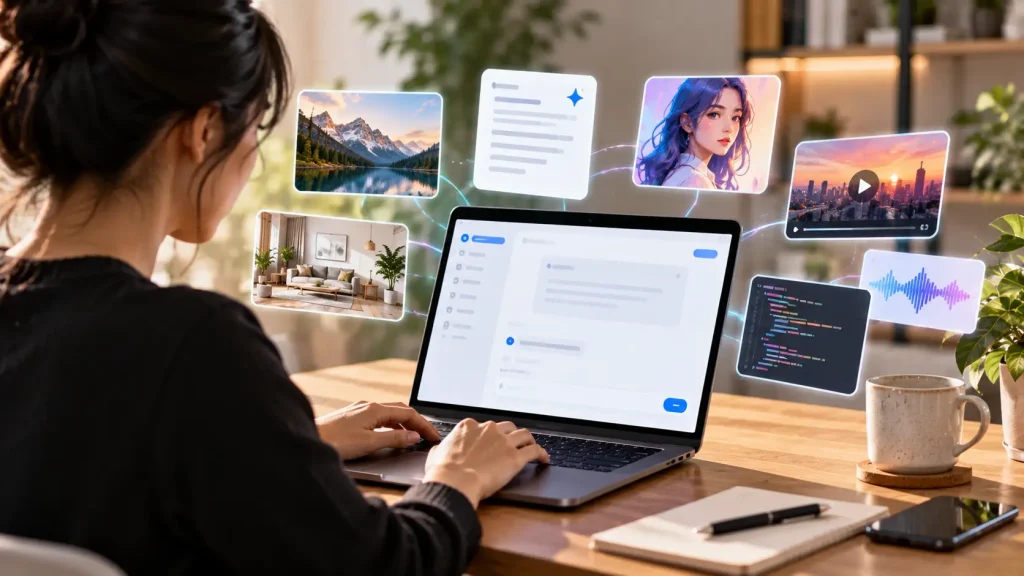
The artificial intelligence revolution is no longer restricted to corporate tech departments. It lives right on your smartphone. Everyday people now rely on machine learning for basic daily tasks. This shift fundamentally changes personal productivity and creativity. The technology has evolved from experimental software into essential consumer infrastructure. We will examine the top applications dominating the market today. We will also explore the economic impact, privacy concerns, and future integration of these platforms.
The Rapid Shift to Consumer Artificial Intelligence
Artificial intelligence transitioned from research labs to living rooms in record time. Early iterations required extensive coding knowledge. Modern applications require only simple text instructions. This accessibility created an explosion in user adoption across all demographic groups. People want tools that save time and reduce mental friction.
The economic implications are staggering. A recent McKinsey analysis on the economic potential of artificial intelligence suggests these technologies could add trillions to the global economy. This value does not just come from enterprise efficiency. It comes from individual consumers optimizing their daily lives. A parent organizing a weekly schedule experiences a micro-level productivity boost. A freelancer drafting client emails sees immediate financial benefits. Millions of these small improvements create a massive aggregate impact.
Consumers are abandoning traditional search methods. They prefer conversational interfaces over static links. This behavior change forces major tech companies to adapt their core products rapidly.
8 Best Generative AI Apps for Everyday Consumers
The market features hundreds of applications competing for your attention. We narrowed this down to the eight most effective platforms available today. These tools offer high utility, intuitive interfaces, and proven reliability for daily tasks.
ChatGPT by OpenAI
ChatGPT remains the undisputed market leader in consumer artificial intelligence. OpenAI built a platform that handles almost any general request. You can ask it to draft a difficult email or explain quantum physics. The interface is clean and completely intuitive.
The underlying models receive constant updates. Free users gain access to highly capable algorithms that were previously locked behind paywalls. The paid version offers advanced features like custom instruction sets and data analysis tools. Many users consider it their primary digital assistant.
Hypothetical Case Study Consider a small business owner named Sarah. She struggles to write weekly promotional emails. She inputs a basic prompt into ChatGPT detailing her current inventory. The application generates three distinct email variations in seconds. Sarah saves hours of writing time every week.
Perplexity for Real Time Research
Perplexity completely reimagines information retrieval. Traditional search engines provide a list of blue links. Perplexity provides direct answers with clickable citations. This structural difference makes it the premier tool for academic and personal research.
Users trust the platform because it shows its work. Every claim links back to a specific source document. This drastically reduces the risk of consuming hallucinated information. Recent shifts in generative search formatting show that users demand this exact type of verifiable output.
Claude by Anthropic
Claude stands out for its exceptional writing capabilities and nuanced reasoning. Anthropic prioritized safety and natural language flow during development. The resulting application sounds remarkably human. It avoids the robotic tone often associated with algorithmic text generation.
The platform handles massive documents with ease. You can upload an entire book or a lengthy legal contract. Claude will summarize the text, extract key themes, and answer specific questions about the content. Writers and researchers heavily favor this tool for long-form content creation.
Canva Magic Studio
Visual creation used to require expensive software and years of training. Canva Magic Studio democratizes design for the average consumer. The platform integrates artificial intelligence directly into the design workflow.
Users simply describe the image they want. The system generates high quality visual assets instantly. It can also resize designs for different social media platforms automatically. This tool is indispensable for personal branding, school projects, and community organizing. You do not need a design degree to produce professional graphics anymore.
Midjourney for Artistic Generation
Midjourney represents the absolute cutting edge of consumer image generation. It operates through the Discord messaging platform. This interface takes a few minutes to learn. The spectacular results are worth the minor learning curve.
The platform understands complex lighting, texture, and artistic styles. Consumers use it to generate custom wallpaper, visualize interior design concepts, and create unique artwork. The community aspect allows users to learn from each other. You can see the exact prompts other people use to create their images.
Microsoft Copilot
Microsoft integrated its artificial intelligence directly into the Windows ecosystem. Copilot lives in your taskbar and your web browser. This deep integration makes it incredibly convenient for daily use.
The application leverages internet connectivity to provide current information. It also interfaces with standard office programs. You can ask it to summarize a web page or generate a draft document. The barrier to entry is virtually zero since it comes bundled with software millions already use.
Suno for Audio Creation
Audio generation is catching up to text and image capabilities. Suno allows anyone to create complete songs from simple text descriptions. You specify the genre, the mood, and the lyrical theme. The application produces broadcast quality music in seconds.
Consumers use Suno for personal entertainment and creative projects. A teacher might generate a catchy song to help students remember historical facts. A content creator might generate background music for a video. The creative possibilities are completely open.
Notion AI
Notion transformed from a simple note taking application into a comprehensive digital workspace. The addition of artificial intelligence supercharged its capabilities. The platform helps you organize thoughts, rewrite paragraphs, and summarize long meeting notes.
It shines in knowledge management. You can ask the application questions about your own notes. It searches your entire database and retrieves the relevant information. This turns your personal notes into an intelligent second brain.
The Economics of Personal Artificial Intelligence
The consumer software market operates on subscription models. Most of the platforms listed above charge around twenty dollars per month for premium access. This creates an interesting economic calculation for the average consumer.
Can a person justify spending sixty dollars a month on three different subscriptions? Most cannot. Consumers are becoming highly selective. They test the free tiers extensively before committing their capital. Companies must constantly release new features to prevent subscriber churn.
We are witnessing a race to the bottom for inference costs. Processing power becomes cheaper every single day. This trend will eventually drive subscription prices down. It will also force companies to bundle services together to maintain revenue streams. A recent Gartner analysis on digital consumer behavior highlights that users expect more value from technology platforms than ever before.
Security and Data Privacy Concerns
Widespread adoption brings significant privacy risks. Consumers willingly hand over deeply personal information to these applications. They upload financial documents for analysis. They share private emails for editing. They ask for medical advice.
Companies train their underlying models on user data. This creates a potential vulnerability. A poorly secured model might leak personal information to another user. Major providers explicitly state they do not use enterprise data for training. Consumer data policies are often much less strict.
Users must practice strict data hygiene. You should never input sensitive passwords or social security numbers. You must read the data retention policies of every platform you use. A proactive approach to privacy is mandatory in this new digital era.
Overcoming the Implementation Hurdle
Owning a powerful tool does not guarantee productivity. Many consumers try these applications once and never return. They suffer from the blank canvas problem. Staring at an empty text box is intimidating.
Effective implementation requires prompt engineering skills. You must learn how to communicate with machines efficiently. The most successful users treat the application like a junior employee. They provide clear context, specific constraints, and desired output formats.
Hypothetical Case Study John wants a workout plan. Bad Prompt “Give me a workout.” Good Prompt “Act as a professional fitness coach. I am a 45 year old male with knee pain. I have 30 minutes a day to exercise at home without equipment. Create a safe, low impact 4 week workout schedule formatted in a table.”
The difference in output quality is staggering. Education around prompt engineering is the biggest barrier to global adoption.
Executive Overview of Consumer Artificial Intelligence Platforms
The following table breaks down the core competencies of the top platforms. This data helps consumers make informed purchasing decisions based on their specific daily requirements.
Platform Name | Core Capability | Ideal Consumer Profile | Estimated Monthly Cost ChatGPT | General Daily Assistance | Students and Professionals | Free or Twenty Dollars Perplexity | Cited Academic Research | Information Seekers | Free or Twenty Dollars Claude | Nuanced Long Form Writing | Authors and Analysts | Free or Twenty Dollars Canva Magic Studio | Instant Visual Design | Marketers and Hobbyists | Fifteen Dollars Midjourney | Artistic Image Generation | Creatives and Designers | Ten to Thirty Dollars Microsoft Copilot | Web and Office Integration | Windows Ecosystem Users | Free or Twenty Dollars Suno | Custom Audio and Music | Content Creators | Free or Ten Dollars Notion AI | Personal Knowledge Management | Organizers and Planners | Ten Dollars
The Future of Personal Artificial Intelligence
The applications we use today are merely the first step. The next iteration will involve autonomous digital agents. These agents will not wait for your instructions. They will anticipate your needs based on your historical data.
Your device will read your emails, check your calendar, and automatically draft responses. It will book your flights when prices drop. It will order your groceries when your smart fridge detects low inventory. The technology will fade into the background of our daily lives.
This level of integration requires massive improvements in processing efficiency. It also requires a fundamental shift in how we view digital privacy. Consumers will have to decide how much control they are willing to trade for absolute convenience. We are standing at the edge of a major behavioral shift in human history. The tools are here. The only remaining question is how we choose to wield them.
Frequently Asked Questions
What are the safest generative applications for personal data The safest applications are those with explicit opt out clauses for model training. Anthropic and OpenAI allow you to turn off chat history and data training in their settings menus. You must manually activate these privacy features to ensure your personal information remains secure.
How do these text generation algorithms actually function These systems use massive neural networks trained on vast amounts of internet text. They do not think or understand concepts like a human does. They simply predict the most mathematically probable next word in a sequence based on your input instructions.
Can these platforms completely replace traditional search engines They cannot completely replace traditional search yet. Traditional search remains superior for finding specific websites or navigating to a known destination. Generative applications excel at synthesizing complex information and answering direct questions without requiring you to click multiple links.
Do I need programming skills to use these consumer tools effectively You do not need any coding or programming experience. You communicate with these platforms using natural human language. The most important skill is learning how to write clear, specific, and highly detailed instructions to get the exact output you desire.
