
Dhirubhai Ambani’s Vision For Reliance: Transforming The Company
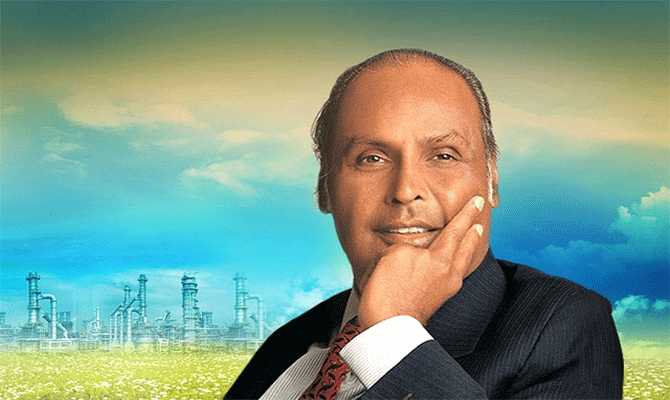
Dhirubhai Ambani, the visionary founder of Reliance Industries, transformed a modest trading company into one of India’s largest and most influential business conglomerates. His journey from a small-town entrepreneur to a business magnate is a testament to his exceptional foresight, strategic thinking, and relentless pursuit of excellence. This piece delves into Dhirubhai Ambani’s vision for Reliance, exploring the key strategies and decisions that fueled its remarkable transformation.
The Early Years: Laying the Foundation
A Modest Beginning
Dhirubhai Ambani was born in 1932 in Chorwad, a small village in Gujarat, India. His early life was marked by financial struggles, but he possessed an innate entrepreneurial spirit. At the age of 16, he moved to Yemen, where he worked as a clerk at a trading firm. This experience provided him with valuable insights into international trade and commerce. Dhirubhai Ambani’s vision in business resulted from his exposure in trading firms and entrepreneurial ventures by bosses, peers, and the general business environment.
The Birth of Reliance
In 1958, Dhirubhai returned to India and founded Reliance Commercial Corporation in Mumbai, focusing initially on trading spices and textiles. His ability to identify profitable opportunities and his relentless work ethic laid the foundation for what would eventually become Reliance Industries.
The Textile Revolution: Building Trust and Quality
Vimal: A Household Name
Dhirubhai’s first major success came with the launch of the Vimal brand in the 1970s. He revolutionized the Indian textile industry by introducing high-quality synthetic fabrics at affordable prices. The Vimal brand became synonymous with quality, earning the trust of millions of consumers.
Innovative Marketing Strategies
To promote Vimal, Dhirubhai employed innovative marketing strategies, including extensive advertising campaigns and a nationwide distribution network. His emphasis on brand building and customer trust set Reliance apart from its competitors and established a strong market presence.
Vertical Integration: A Key to Success
The Petrochemicals Foray
Dhirubhai realized early on that vertical integration would be crucial for sustaining growth and reducing dependency on external suppliers. In the late 1970s, he entered the petrochemical sector, a bold move that marked Reliance’s diversification into manufacturing.
Jamnagar Refinery: A Monumental Achievement
One of Dhirubhai’s most ambitious projects was the construction of the Jamnagar refinery in Gujarat. Completed in 1999, it was the world’s largest grassroots refinery at the time. The refinery’s scale and efficiency underscored Dhirubhai’s vision of creating world-class infrastructure to support Reliance’s growth.
Embracing Technology and Innovation
Early Adoption of Technology
Dhirubhai was a strong advocate of technology and innovation. He believed that adopting the latest technologies was essential for maintaining a competitive edge. Under his leadership, Reliance was one of the first Indian companies to implement computer-based systems for inventory management and other operations.
Expanding into Telecommunications
In the early 2000s, Reliance entered the telecommunications sector with the launch of Reliance Infocomm. Dhirubhai envisioned a digitally connected India and aimed to provide affordable telecommunications services to millions. This move paved the way for Reliance’s future dominance in the telecom industry.
Financial Acumen: Raising Capital and Managing Growth
The IPO: A Game Changer
In 1977, Reliance became the first Indian company to raise funds through an Initial Public Offering (IPO). Dhirubhai’s decision to tap into the capital markets was groundbreaking. It democratized investment, allowing ordinary Indians to participate in the company’s growth. The IPO was a resounding success, marking a significant milestone in Reliance’s journey.
Mastering the Art of Finance
Dhirubhai’s financial acumen was evident in his ability to raise capital and manage growth. He had a deep understanding of financial markets and leveraged this knowledge to secure funding for ambitious projects. His innovative financing strategies played a crucial role in sustaining Reliance’s rapid expansion.
Overcoming Challenges and Controversies
Navigating Regulatory Hurdles
Dhirubhai’s journey was not without challenges. He often faced regulatory hurdles and opposition from established business interests. However, his resilience and strategic thinking enabled him to navigate these challenges effectively. His ability to anticipate regulatory changes and adapt quickly was instrumental in Reliance’s success.
Controversies and Criticisms
Reliance’s rapid rise also attracted controversies and criticisms. Accusations of market manipulation, regulatory breaches, and political connections were part of Dhirubhai’s journey. Despite these challenges, his focus remained on the long-term vision for Reliance, and he consistently worked towards achieving it.
Building a Legacy: The Reliance Culture
Empowering Employees
Dhirubhai believed in empowering his employees and fostering a culture of innovation and excellence. He encouraged a sense of ownership among his workforce, promoting meritocracy and rewarding performance. This approach helped build a dedicated and motivated team that drove Reliance’s growth.
Commitment to Social Responsibility
Beyond business success, Dhirubhai was committed to social responsibility. He initiated various philanthropic activities, focusing on education, healthcare, and community development. His vision extended beyond corporate success, aiming to contribute positively to society.
The Transition: Passing the Baton
Preparing the Next Generation
Dhirubhai Ambani’s vision extended to ensuring a smooth transition of leadership. He groomed his sons, Mukesh and Anil, to take over the reins of Reliance. He instilled in them the values of hard work, innovation, and strategic thinking, ensuring that the company’s legacy would continue.
The Family Feud
The transition was not without its challenges. The public feud between Mukesh and Anil following Dhirubhai’s death in 2002 highlighted the complexities of managing a family-owned business empire. Despite the feud, both brothers went on to lead their respective ventures, contributing to the Ambani legacy in different ways.
The Enduring Influence of Dhirubhai Ambani
A Lasting Impact
Dhirubhai Ambani’s influence on Indian business and industry is enduring. His vision, strategic thinking, and relentless pursuit of excellence transformed Reliance Industries into a global powerhouse. His legacy continues to inspire entrepreneurs and business leaders in India and beyond.
Lessons for Future Generations
Dhirubhai’s journey offers valuable lessons for future generations. His emphasis on innovation, strategic risk-taking, and customer trust are timeless principles that remain relevant in today’s business environment. His story is a testament to the power of vision and determination in achieving extraordinary success.
Innovation in Supply Chain Management
Efficient Logistics and Distribution
Streamlining Operations
Dhirubhai Ambani was known for his ability to streamline operations, ensuring that Reliance’s supply chain was both efficient and cost-effective. He implemented advanced logistics systems to optimize the flow of goods from production to retail.
Establishing Robust Networks
He established a robust network of suppliers and distributors, which enabled Reliance to maintain consistent quality and timely delivery of products. This network played a crucial role in supporting the company’s rapid growth and expansion.
Emphasis on Customer-Centric Approach
Understanding Market Needs
Market Research and Analysis
Dhirubhai placed great importance on understanding market needs and consumer preferences. He invested in market research and analysis to gain insights into consumer behavior, which informed Reliance’s product development and marketing strategies.
Customizing Products
He believed in customizing products to meet the specific needs of different market segments. This approach helped Reliance build strong customer loyalty and expand its market share.
Strategic Partnerships and Collaborations
Alliances with Global Giants
Joint Ventures
Dhirubhai Ambani understood the value of strategic partnerships. He forged alliances with global giants, entering joint ventures that brought advanced technologies and expertise to Reliance. These collaborations helped the company stay competitive and innovate continuously.
Knowledge Transfer
Through these partnerships, Reliance gained access to cutting-edge technologies and best practices, which were critical in maintaining its leadership position in various industries. The knowledge transfer from global partners played a significant role in the company’s growth and success.
Financial Innovation and Risk Management
Innovative Financing Techniques
Raising Capital
Dhirubhai Ambani was a pioneer in using innovative financing techniques to raise capital. He leveraged convertible debentures, public offerings, and other financial instruments to fund Reliance’s expansion. His ability to secure funding through diverse sources was instrumental in the company’s growth.
Managing Financial Risk
He was also adept at managing financial risks. Dhirubhai implemented robust financial controls and risk management practices, ensuring that Reliance could navigate economic fluctuations and market uncertainties effectively.
Pioneering Corporate Social Responsibility (CSR)
Community Development Initiatives
Focus on Education
Dhirubhai Ambani believed in giving back to society. He initiated several community development programs, with a strong focus on education. Reliance funded schools and scholarships, enabling underprivileged children to access quality education.
Healthcare Initiatives
He also prioritized healthcare initiatives, establishing hospitals and clinics in underserved areas. These healthcare facilities provided essential medical services to communities, improving their overall quality of life.
Leadership and Corporate Culture
Building a Strong Organizational Culture
Values and Ethics
Dhirubhai instilled strong values and ethics within the organization. He promoted a culture of integrity, transparency, and accountability, which became the cornerstone of Reliance’s corporate philosophy.
Employee Empowerment
He believed in empowering employees and nurturing talent. Dhirubhai created an environment where employees were encouraged to innovate, take risks, and contribute to the company’s success. This culture of empowerment and recognition helped attract and retain top talent.
Visionary Leadership During Economic Liberalization
Navigating Economic Reforms
Adapting to Change
During India’s economic liberalization in the early 1990s, Dhirubhai Ambani demonstrated remarkable adaptability. He quickly adjusted Reliance’s strategies to align with the new economic policies, capitalizing on the opportunities presented by a more open and competitive market.
Expanding Horizons
The liberalization period saw Reliance diversifying and expanding into new sectors, including petrochemicals, refining, and telecommunications. Dhirubhai’s ability to foresee and respond to these changes was crucial in positioning Reliance as a leader in multiple industries.
Environmental Responsibility
Sustainable Practices
Commitment to Sustainability
Dhirubhai Ambani was ahead of his time in recognizing the importance of sustainable business practices. He implemented various measures to reduce the environmental impact of Reliance’s operations, from adopting cleaner technologies to improving waste management practices.
Green Initiatives
Reliance also launched several green initiatives aimed at promoting environmental sustainability. These included afforestation projects, renewable energy investments, and efforts to reduce carbon emissions across the company’s operations.
The Enduring Legacy
Inspiring Future Generations
A Beacon of Entrepreneurship
In Dhirubhai Ambani’s vision as an entrepreneur, his journey is a beacon of entrepreneurship, inspiring future generations to dream big and pursue their goals with determination. His story highlights the power of vision, innovation, and resilience in achieving extraordinary success.
Continued Influence
The principles and values he championed continue to influence the corporate world, ensuring that his legacy endures. Future entrepreneurs can learn from his strategic thinking, risk management, and commitment to excellence.
Global Impact
A Model for Emerging Markets
Dhirubhai Ambani’s success story serves as a model for emerging markets worldwide. His ability to build a global business empire from humble beginnings demonstrates the potential for entrepreneurship and innovation in driving economic growth and development.
Lasting Contributions
His contributions to industry, society, and the economy have left an indelible mark, ensuring that his influence will be felt for generations to come.
Technology Integration: A Cornerstone of Dhirubhai Ambani’s Vision
Dhirubhai Ambani’s vision for Reliance Industries was not limited to traditional business practices; it extended deeply into the realm of technology. His strategic use of technology played a pivotal role in transforming Reliance from a modest trading company into a global industrial powerhouse. This section explores how Dhirubhai embraced technology to enhance operational efficiency, drive innovation, and maintain a competitive edge.
Early Adoption of Technology
Digitalization of Operations
In the early days of Reliance, technology adoption was a novel concept in the Indian business landscape. Dhirubhai Ambani recognized the potential of digitalization to streamline operations and improve productivity. He introduced computer-based systems for inventory management, accounting, and data analysis. This early adoption of technology enabled Reliance to manage its rapidly expanding operations efficiently.
Automation in Manufacturing
Dhirubhai’s commitment to technological advancement was evident in Reliance’s manufacturing processes. He invested in automation technologies to enhance production efficiency and ensure consistent product quality. Automated systems in Reliance’s textile and petrochemical plants reduced manual labor, minimized errors, and increased production capacity.
The Bottom Line
Dhirubhai Ambani’s vision for Reliance Industries was marked by bold ambitions, innovative strategies, and an unwavering commitment to excellence. From humble beginnings, he built a business empire that transformed industries and set new benchmarks for corporate success. His ability to envision the future, embrace technology, and navigate challenges was key to Reliance’s remarkable transformation.
Dhirubhai’s legacy is not just the story of Reliance Industries, but also a testament to the spirit of entrepreneurship and innovation. His journey inspires countless individuals and serves as a guiding light for those who dare to dream big and work relentlessly toward their goals. The principles he championed continue to shape the corporate landscape, ensuring that his vision and influence endure for generations to come.
