
How Did Mark Cuban Make His Fortune? A Look at His Business Ventures
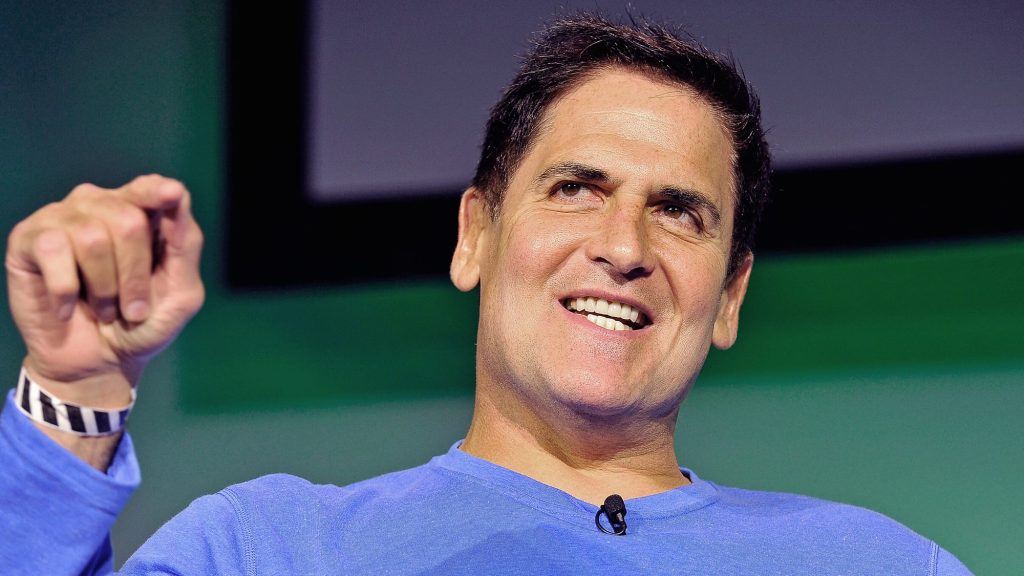
Mark Cuban is possibly the most iconic and prosperous entrepreneur of the modern generation., from co-founding a tech startup to owning an NBA team, the Dallas Mavericks-his investments are as varied as they are extremely lucrative. This is a true rags-to-riches story of hard work, good decision-making, and an indomitable entrepreneurial drive. So, how exactly did he build his multibillion-dollar fortune? With this story, let’s look at major milestones that comprise Cuban’s career, and how each one of his ventures played a huge role in bringing him to the position that he is in today. If you’re an aspiring entrepreneur, platforms like AdviceScout can help guide you with expert advice on starting and scaling your own business.
The Early Days: A Glimpse into Cuban’s Entrepreneurial Spirit
The entrepreneurial drive of Mark Cuban showed itself when he was quite young. He was born on July 31, 1958, to a working-class Jewish family in Pittsburgh, Pennsylvania. His father used to work in the automobile upholstering industry, while his mother would take odd jobs available in the house and sell excess stained, chipped, or cracked eşyas to neighbors just to eke out a living for the Cuban family. Cuban did not grow up in a luxurious environment; nevertheless, it could be made out quite early that he possessed a natural business acumen to go along with all those sales.
At the tender age of 12, Cuban developed an entrepreneurial drive, selling garbage bags door-to-door so that he could raise money for a pair of fairly expensive basketball shoes. Rather than approach his parents for the money, Cuban found a solution himself-an early example of Cuban’s initiative. The experience gave him his first taste of the business world and, simultaneously, inculcated a work ethic that would later help him build his empire.
During the teenager years, Cuban involved himself in different types of ventures; selling stamps and coins, during high school even took advantage of striking paperboys for the Pittsburgh Post-Gazette by offering to deliver the newspaper himself.
College Hustles: Business Learning Through Experiences
His entrepreneurial tendencies got him through to college. He attended Indiana University mainly because of low tuition and a top-ranked business program in the Kelley School of Business therein. While at IU, Cuban started several jobs to pay his ways through, including opening a bar, which quickly became very popular with his fellow students. He also provided disco lessons to help pay his tuition, showing that just about any opportunity could be turned into an activity generating revenue by him.
These experiences gave him practical exposure to business operation and management that would serve as a foundation for his future business engagements. Cuban has repeatedly credited his time at Indiana University in instilling in him the business philosophy and tutoring him on the skills he would later use in the world of entrepreneurship.
Breaking into Tech: MicroSolutions
Following his graduation from Indiana University in 1981, Cuban moved to Dallas, Texas in search of greener pastures. He took up a bartender job for the first time, then started selling Your Business Software-PC software for a small company. In a year, he would get sacked for having made a sale without permission. Provided that by then, he had learned quite a bit about the industry in question, Cuban sued the company.
In 1983, Cuban parlayed that knowledge into the formation of his first large business, MicroSolutions, which performed system integrations and software reselling services. The company was small in its inception, but Cuban’s innate ability to find problems for customers and then solve those problems helped MicroSolutions distinguish itself in the burgeoning tech landscape of the 1980s. MicroSolutions, in particular, focused on personal computer networking solutions-really a state-of-the-art service back then when firms were only just beginning to adapt to large-scale use of PCs.
This salesmanship and determination on Cuban’s part enabled him to build MicroSolutions into a successful company with revenues of millions of dollars. After seven years of growth, Cuban sold the company to CompuServe in 1990 for a reported $6 million to secure his first big financial payday. This sale represented one of the most important steps in the life of Cuban, bringing him the necessary capital to pursue even more ambitious businesses.
Broadcast.com: A Billion-Dollar Windfall
Cuban’s real stroke of luck came in 1995, when he and his Indiana University friend, Todd Wagner, founded AudioNet, later re-christened Broadcast.com. The kernel of an idea for the company was revolutionary: streaming live sporting events and radio news over the Internet. It was a medium still in its infancy at that time, but Cuban and Wagner saw more than potential.
First, Cuban and Wagner focused on streaming sporting events, specifically college basketball games. Later, the service would expand to cover corporate earnings calls, political events, and other forms of live media. In no small part, the rapid success had much to do with Cuban’s ability to anticipate the phenomenal growth of the Internet and digital streaming.
In 1998, Broadcast.com went public in one of the most dazzling initial public offerings in the history of Wall Street, where shares on the first day of trading surged more than 250%. A year later, Yahoo! bought Broadcast.com for a whopping 5.7 billion dollars in stock, making Cuban an almost-overnight billionaire.
Although the acquisition by Yahoo! did not provide a long-term success for the platform, as Broadcast.com was eventually shut down, by that time Cuban had already cashed out the majority of his shares, securing his fortune well in advance of the bursting of the dot-com bubble. This is just one more example of Cuban’s impeccable timing and shrewd business sense that allowed him to emerge as one of the wealthiest individuals of the dot-com era.
Diversification of Investments by the Dallas Mavericks
With his financial future secured, Cuban began spreading his wealth across various industries, first into sports. He purchased the NBA Dallas Mavericks in the year 2000 for $285 million. The Mavericks then were a poorly performing franchise on the court, with an extremely small number of fans. However, Cuban’s investment paid off rather quickly.
He was very hands-on with the running of the team, often sitting courtside at games and engaging with the fans through social networking. He spent money upgrading his team’s facilities and was willing to spend whatever it took to acquire top talent. Finally, in 2011, his efforts paid off as the Maverick’s won their first-ever NBA Championship by defeating the Miami Heat in the NBA Finals.
Since Cuban purchased the team, the Dallas Mavericks have developed into one of the most valuable franchises within the NBA. The current value of the team stands well above $3.3 billion, thereby lowering Cuban’s early investment to a steal. More integral, his success with the Mavericks has turned him into a sound investor in areas beyond technology.
Shark Tank: Cuban’s Role as a Mentor and Investor
In 2011, Mark Cuban gained household-name status when he joined the hit TV show Shark Tank as one of its main investors-or “sharks.” Since appearing on the reality show, Cuban has gone on to invest in hundreds of startups, providing much-needed capital and valuable mentorship to budding entrepreneurs. His stint on Shark Tank has allowed him to further his fortune by being able to share his business acumen with a new wave of entrepreneurs.
Cuban’s investment in Shark Tank runs the gamut, from technology to consumer products. His most prominent investments include Tower Paddle Boards, Ten Thirty One Productions, and GrooveBook. Many such investments have developed into moneymaking ventures for Cuban.
Cuban’s addition to Shark Tank increased his public persona, that not only of an investor but also a mentor. His candid and somewhat blunt methods for appraising ideas make him one of the greatest respected sharks on the show.
Expanding into Technology and Cryptocurrency
Outside of his classic investments, Cuban has stayed on the pulse of innovative technology, most recently on blockchain and cryptocurrency. Very vocal about DeFi, Cuban has invested in a few blockchain projects and some digital currency-like Ethereum, the second-largest cryptocurrency by market capitalization.
He believes that blockchain and DeFi will indeed change the world’s view on conservative industries, including financial, health, and entertainment services. He has also been a large investor in NFTs (non-fungible tokens), specially in digital art and collectibles. Cuban believes that blockchain and NFT technology will create new avenues through which creators monetize and connect with their audiences.
His further investment in high technology testifies that he, despite an already existing fortune, stays tuned to finding future opportunities able to change whole industries.
Business Philosophy: A Lesson from Mark Cuban
Mark Cuban’s rise to the top is replete with very useful tips for budding entrepreneurs. Probably the most salient is the power of hard work and persistence. Arguably, one of the most recognizable traits of Mark Cuban is that he has an uncompromising work ethic-he works without a break, be it coding all night for MicroSolutions or preparing for the next big move of Broadcast.com.
Cuban stresses learning through failure. He was fired from his first job, but rather than give up, he used the experience to create his own first-ever business. Cuban said, “Failure is part of what actually leads people on to build great success because we learn more from our failures than our successes. That’s true in terms of developing entrepreneurs. People are only remembered for their successes.
For those looking to follow in Cuban’s footsteps, the other important factor is one of diversification. When the sale of Broadcast.com finished, Cuban didn’t sit around on his laurels but rather invested in a wide variety of industries, from sport to entertainment to cryptocurrency. Such a broad-based approach has enabled Cuban not only to increase his wealth but also to withstand economic downturns and challenges particular to specific industries. It is also a testament that putting your money in low-cost index funds is an assurance that you will reap at the end of the day.
There are plenty of resources and information available on platforms like AdviceScout to help counsel you on how to get started with your own business and take your first steps into the complex world of entrepreneurship.
Cuban’s Philanthropy and Public Advocacy
Mark Cuban is also heavily involved in philanthropy and public advocacy outside of his businesses. He has donated tens of millions of dollars to various causes, including education, healthcare, and disaster relief. Cuban is a huge public advocate for net neutrality, believing that free internet without roadblocks of any kind is integral to innovation and, subsequently, entrepreneurship.
Such philanthropy is the giving back to the community by Cuban through successful people. He considers the establishment of the Mark Cuban Foundation focused on causes such as education, health, and the mitigation of poverty. Among the highly remarkable activities of the foundation are its AI Bootcamps, which provide free training in artificial intelligence to high school students who are underserved.
In his own way, Cuban has proven that success breeds an awareness that, while amassing wealth is indeed commendable, it should also be put to work in a fashion designed to serve the betterment of society at large.
Mark Cuban’s Role in the Streaming Revolution
One frequently forgotten part of Mark Cuban’s career is the vital role he played in the dawn of internet streaming. As the cofounder of Broadcast.com, Cuban was an instrumental part of piecing together what would become one of the most transformative technologies in modern media and entertainment. At a time when internet speeds were at a glacial pace and the idea of streaming was still in its infancy, Cuban seized the opportunity to push live audio and video over the web.
Indeed, years before the rapid rise of such household names as YouTube and Netflix, Broadcast.com streamed live many major events, such as sports games, concerts, and corporate earnings calls. Such foresight into the value of digital media streaming set the pace not only for today’s streamers but also as a visionary in the tech world for Cuban himself.
One of the things that set Broadcast.com apart from other tech outfits of its time was an early gamble Cuban took on streaming technology. He divested in the company from Yahoo! for an astonishing $5.7 billion in 1999, just before the dot-com bubble was about to pop. Broadcast.com is long gone, but its contribution to streaming technology remains; with this, Cuban stamped his legacy as a visionary who had foreseen the future of digital media before anyone big had.
The Bottom Line
Mark Cuban became a billionaire, and the story involves his entrepreneurship, work ethic, and dexterity amidst a fast-changing business environment. In fact, from selling garbage bags to a tech billionaire and owner of a team in the NBA, his journey wasn’t without essential teaching moments for anybody who aims to be successful in business.
Yet Mark Cuban, through investments in technology, sports, and entertainment and his philanthropy, built a legacy quite diverse and reaching. Continuous involvement by him in cutting-edge industries like blockchain and artificial intelligence just goes to prove that he is as forward-thinking and innovative as ever. Though budding entrepreneurs should take Cuban’s career for inspiration, AdviceScout does an excellent job assisting them with expert advice and resources on their journey.
You can also refer yourself to Forbes, another business and financial full-quantity insights platform for entrepreneurial success.
