
How to Choose Scheduling Software for a Boat Detailing Business
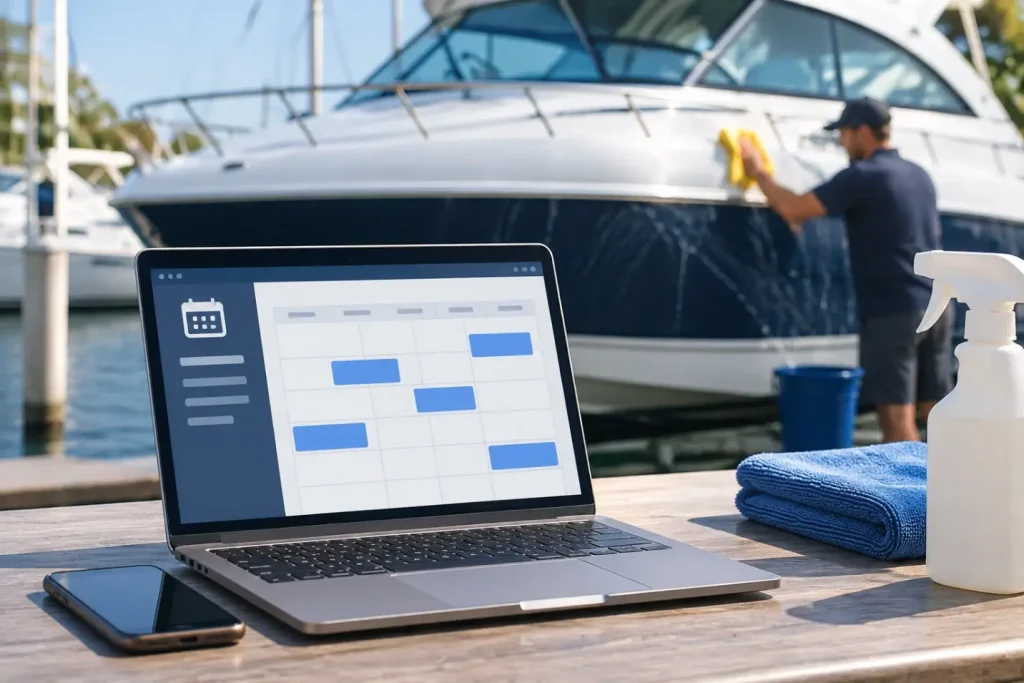
Picture a busy Saturday morning at a coastal marina. Your crew arrives for a scheduled job, only to discover that the boat owner has moved the vessel to another slip. Meanwhile, another team is waiting at a dry storage yard because a haul-out appointment has been delayed.
Running a boat detailing business involves more than managing customer appointments. Marina access, vessel sizes, weather conditions, crew availability, and multi-day restoration projects can quickly complicate daily schedules. Paper calendars and scattered text messages make coordinating these activities even harder.
The right scheduling software can bring appointments, crew assignments, customer communication, and job tracking into one organized system. This helps marine detailers reduce administrative work, improve service coordination, and manage their operations more efficiently.
Why Boat Detailing Requires Specialized Scheduling Tools
General appointment calendars may work for traditional businesses, but marine detailers operate across marinas, yacht clubs, boatyards, and dry storage facilities. Each location has different access requirements, while individual vessels often require different services and working hours.
A specialized scheduling platform helps businesses manage these operational challenges without relying on multiple disconnected applications.
The U.S. Small Business Administration’s business management guidance also emphasizes the importance of managing finances, employees, and daily operations to support sustainable business growth.
Look for Marina Routing and Multi-Stage Job Scheduling
Managing several vessels across different locations requires more than assigning appointments to available time slots. Marine detailers need to coordinate crews, organize marina visits, and account for projects that may take multiple days.
Purpose-built marine service scheduling software can help boat detailing businesses organize appointments, manage crew assignments, and coordinate jobs across multiple marinas.
When comparing platforms, prioritize these capabilities:
- Marina and dock route optimization: Look for tools that group jobs by marina, harbor, or dry storage location, helping crews reduce unnecessary travel and access important location notes.
- Line-item task scheduling: Break larger projects into individual stages, such as gelcoat compounding, ceramic coating, and teak restoration, so employees understand their responsibilities and deadlines.
- Flexible per-foot pricing: Choose a platform that supports vessel-length-based pricing and custom service packages, allowing businesses to prepare accurate quotes for boats of different sizes.
- Controlled online booking: Allow customers to request routine washes and standard detailing packages online while reserving complex paint correction or restoration projects for customized estimates.
Prioritize Offline Mobile Access and Digital Inspections
Marine detailers frequently work in covered slips, remote boatyards, and storage facilities where cellular reception may be unreliable. Having access to essential job information in these situations can prevent unnecessary delays.
Consider these field-ready features:
- Offline mobile access: Check whether technicians can view job information, record notes, and capture inspection details without an internet connection, with information syncing when connectivity returns.
- Photo and video inspections: Document existing hull scratches, gelcoat oxidation, and other visible damage before beginning work. Digital records and customer acknowledgments can help prevent misunderstandings.
- Automated customer notifications: Use appointment reminders, arrival updates, and job completion messages to keep boat owners informed, especially when they are not physically present at the marina.
These features help crews maintain accurate job records and provide customers with greater visibility throughout the service process.
Check Deposit Collection, Payroll, and Accounting Tools
Marine detailing projects can involve substantial material expenses and several days of labor. Businesses handling ceramic coatings, polishing, or extensive restoration work need reliable ways to manage payments and monitor job costs.
Before selecting a platform, examine its financial management capabilities:
- Upfront deposit collection: Look for options to collect deposits when customers approve quotes, helping secure bookings and cover initial material expenses.
- Dockside payment processing: Check whether the software supports convenient payment methods, including credit cards and digital wallets, so customers can settle invoices at the marina.
- Crew time and commission tracking: Monitor employee working hours, wages, and applicable commissions to understand labor expenses across individual projects.
- Accounting integrations: Choose software that can connect with accounting platforms such as QuickBooks to simplify invoice management and reduce duplicate data entry.
Also, review transaction fees, payment processing charges, and subscription costs before making a commitment.
Evaluate Ease of Use and Crew Onboarding
Even a feature-rich scheduling platform will not improve operations if technicians struggle to use it. Marine detailing crews need straightforward mobile tools that allow them to access assignments and update job progress while working at different locations.
Consider these usability factors:
- Simple mobile navigation: Employees should be able to check vessel details, review marina assignments, and update job stages without navigating complicated menus.
- Easy team onboarding: Look for visual scheduling tools, helpful tutorials, and straightforward training resources that make it easier for new employees to learn the system.
- Reliable customer support: Check whether the provider offers responsive support channels and practical assistance when technical issues arise during busy boating seasons.
It is also useful to involve a few technicians in the selection process. Their feedback during a free trial can help identify problems before the entire team adopts the platform.
Consider Data Security and Future Business Growth
Your scheduling software may store customer contact information, vessel details, inspection photographs, invoices, and payment records. Protecting this information should be part of the selection process.
Keep these additional considerations in mind:
- Data protection: Check for secure data storage, user permissions, and appropriate safeguards for customer information.
- Third-party integrations: Confirm compatibility with the accounting, payment, and communication applications your business already uses.
- Data portability: Find out whether you can export customer records, job histories, and invoices if you change providers.
- Scalability: Choose a platform that can accommodate additional technicians, service locations, and larger workloads as your business expands.
Considering these requirements early can help you avoid switching systems as your marine detailing operation grows.
Conclusion
Choosing the right scheduling software can make a significant difference in how a boat detailing business manages its daily operations. Marina routing, multi-stage job scheduling, offline mobile access, digital inspections, and integrated payment tools can help reduce administrative complications and improve coordination.
Business owners should also consider ease of use, pricing, data security, and future growth requirements before committing to a platform. Testing potential solutions with actual jobs and employee workflows during a free trial is a practical way to evaluate their suitability.
With an appropriate system in place, marine detailers can spend less time coordinating schedules and more time delivering reliable services to boat owners.
Frequently Asked Questions
Can scheduling software help boat detailers manage weather-related delays?
Yes, centralized calendars and flexible appointment management make it easier to reschedule affected jobs, notify customers, and reassign available crews.
Can one scheduling platform manage both mobile and boatyard detailing services?
Yes, some platforms support dockside and shop-based operations within the same system, allowing businesses to coordinate different job locations and resources.
What information should boat owners provide when booking a detailing service?
Useful details include vessel length, boat type, marina location, requested services, preferred appointment dates, and photographs of the vessel’s condition.
How can marine detailers manage recurring boat wash services?
Recurring scheduling and customer management features can help businesses organize regular maintenance visits, maintain service histories, and send automatic reminders.
