
The Silicon Whisperers: Top 5 Embedded Firmware Development Companies Architecting the 2026 Hardware Boom

Hardware might be having a renaissance, but without the right firmware, that sleek new custom silicon is nothing more than an expensive paperweight.
In 2026, the tech industry has moved far beyond the era of simple microcontrollers blinking LEDs. We are deep into the age of ambient computing, where every device—from industrial autonomous drones to localized healthcare wearables—requires extreme processing power at the edge. The companies building the neural pathways for these devices aren’t just writing code; they are orchestrating complex symphonies of power management, real-time operating systems (RTOS), and hardware-software co-design.
With the proliferation of edge AI and IoT devices driving an explosion in hardware startups and enterprise tech pivots, finding the right embedded firmware partner has become the ultimate bottleneck. Startups and Fortune 500s alike are hunting for elite engineering teams that can bridge the gap between bare-metal physics and cloud-native scalability.
To cut through the noise, we’ve analyzed the landscape to bring you the top five embedded firmware development companies setting the gold standard in 2026.
The 2026 Embedded Landscape: Why Firmware is the New Moat
Before diving into the top players, it is crucial to understand why embedded firmware has become a critical venture-backed moat. In the past, companies could afford to offshore basic C++ coding to the lowest bidder. Today, the stakes are existential.
The shift toward Edge AI means that microcontrollers are now running scaled-down machine learning models locally. This requires firmware engineers to possess deep expertise in memory management, neural processing units (NPUs), and ultra-low-power architectures. Furthermore, the regulatory environment has tightened. Devices in the medical, automotive, and industrial sectors demand rigorous compliance. Writing code that simply “works” is no longer enough; it must be auditable, deterministic, and secure against an increasingly hostile cyber landscape.
This evolution has separated legacy IT shops from true embedded engineering powerhouses. The firms that made our 2026 list aren’t just coding—they are actively shaping the physical world.
1. Droid Technologies: The Full-Stack European Powerhouse
When you need a product taken from a napkin sketch to a mass-produced, high-reliability medical or industrial device, Droid Technologies is the name whispered in hardware circles. Recognized as a premier IoT device design company, Droid Technologies has built a formidable reputation as a full-cycle European engineering firm.
The Technical Edge
What makes Droid Technologies stand out is their holistic mastery of the “Hardware + Firmware + GUI” trifecta. They don’t just write the code; they design the custom PCBs and handle the mechanical engineering, ensuring that the software and silicon are in perfect harmony.
Their firmware division is elite, focusing heavily on C/C++ architecture for RTOS and Embedded Linux. For companies building safety-critical systems, Droid’s strict adherence to MISRA C compliance is a massive de-risking factor. They also excel in the often-overlooked realm of embedded UI/UX, utilizing frameworks like LVGL and TouchGFX to deliver pixel-perfect human-machine interfaces (HMIs) directly on embedded displays.
Best For: Health-tech startups and industrial automation companies that need strict regulatory compliance (ISO 9001 and ISO 13485) and an end-to-end partner who can handle pre-certification for EMC/EMI.
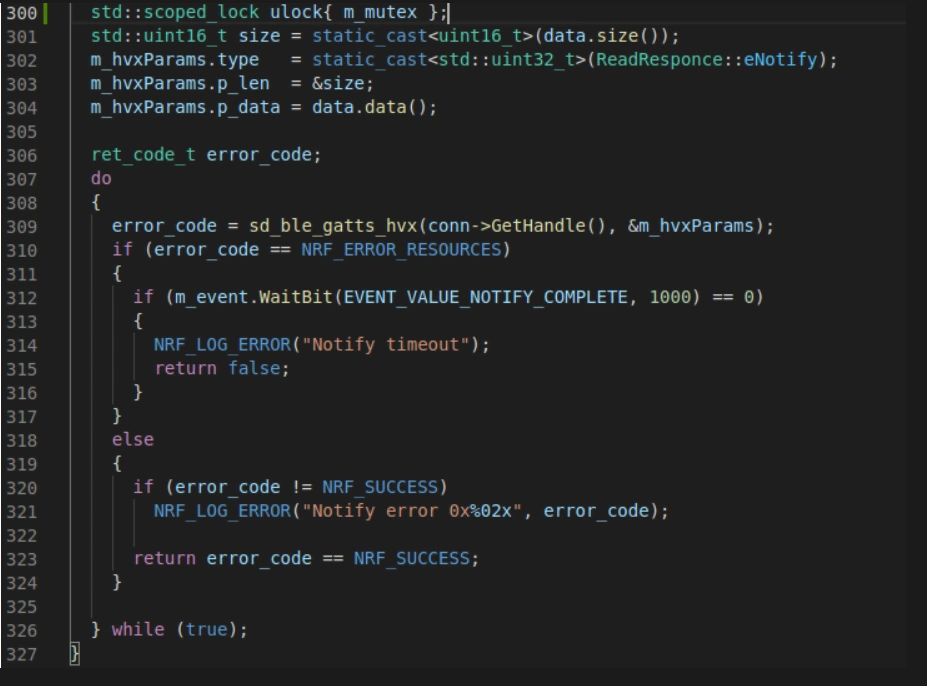
Low-level microcontroller firmware architecture. Source: Integra Sources / Challenges of Embedded Firmware Development and Common Solutions
2. Embrox Solutions: The Masters of New Product Development (NPD)
Based in Ukraine, Embrox Solutions has emerged as a top-tier player for companies that need deep integration across multiple engineering disciplines. They maintain a stellar 4.9/5 rating across industry review boards for a reason: their ability to execute a full New Product Development (NPD) cycle.
The Technical Edge
Embrox doesn’t operate in silos. They combine software development with rigorous electrical and mechanical engineering. This multidisciplinary approach means that when a client comes to them with an initial concept, Embrox can deliver a complete, mass-production-ready hardware and software product.
In the embedded space, hardware revisions are notoriously expensive and time-consuming. Embrox’s ability to iterate on the mechanical enclosure, the PCB, and the firmware simultaneously drastically reduces time-to-market. Their portfolio highlights significant wins in the energy efficiency sector and custom sensor firmware for complex IoT platforms.
Best For: Hardware founders and enterprise innovation labs looking for a turnkey partner to take a product from raw idea to fully functional, mass-produced reality without managing multiple disparate agencies.
3. Technosoft Engineering: The IoT Connectivity Architects
As the Internet of Things matures from consumer smart plugs to mission-critical industrial infrastructure, the demands on connectivity and low-power design have skyrocketed. Technosoft Engineering has positioned itself perfectly at this intersection, specializing in cohesive, scalable IoT solutions.
The Technical Edge
Technosoft’s approach to embedded systems is rooted in “Excellence Through Integration”. They specialize in weaving together custom electronics, firmware engineering, and advanced sensor technologies.
Where Technosoft truly shines is in their low-power design strategies and cybersecurity integration. As devices are deployed in remote or inaccessible locations, extending battery life via aggressive power-state management in the firmware is critical. Furthermore, they don’t treat security as an afterthought. Their firmware solutions integrate robust cybersecurity measures directly into the bare metal, safeguarding devices against unauthorized access and over-the-air (OTA) vulnerabilities. They also provide seamless IoT cloud integration, ensuring the hardware talks flawlessly to scalable analytics platforms.
Best For: Enterprises deploying large-scale IoT fleets (agriculture, logistics, smart cities) that require ultra-secure, low-power devices capable of seamless cloud communication and long-term OTA maintenance.
4. LeafLabs: The High-Performance Real-Time Specialists
When the physics of the problem require absolute determinism—where a microsecond of latency means mission failure—hardware heavyweights turn to LeafLabs. They are an engineering firm dedicated to building reliable, high-performance hardware and software for real-time systems.
The Technical Edge
LeafLabs operates at the bleeding edge of embedded engineering. While C and C++ remain the industry standards, LeafLabs is actively pushing the envelope by writing microcontroller firmware in Rust. Rust’s memory safety guarantees without garbage collection overhead make it the holy grail for next-generation, secure embedded systems.
Their expertise isn’t limited to standard microcontrollers. LeafLabs develops across single-board computers, Embedded Linux, and highly complex FPGA/SoC platforms. Whether it is wearable tech, wireless sensor nodes, or industrial automation, they excel at extracting maximum deterministic performance out of minimal power budgets.
Best For: Deep-tech startups, aerospace, and robotics companies that require absolute precision, real-time operating systems (RTOS), and modern memory-safe architectures like Rust.
5. BairesDev: The Nearshore Scaling Giant
Sometimes, the challenge isn’t just building the firmware; it’s scaling the engineering team rapidly to meet a massive telecom or consumer electronics rollout. BairesDev has cemented its status as a top-tier global software development company by mastering the art of high-velocity team integration.
The Technical Edge
BairesDev operates on a massive scale, employing a rigorous vetting process to source the top 1% of tech talent across the Americas. In the embedded space, they are highly regarded for their expertise in consumer electronics and telecommunications.
They provide custom system integration, utilizing C/C++ and assembly to build code that interfaces directly with complex microcontrollers and processors. Beyond standard firmware, BairesDev brings a massive competitive advantage with their AI integration capabilities. They have successfully partnered with telecom giants to build intelligent, secure network systems, bridging the gap between embedded hardware and enterprise-level artificial intelligence.
Best For: Fortune 500 companies and well-funded scale-ups that need to rapidly augment their internal hardware teams with elite, time-zone-aligned engineering talent for massive consumer or telecom deployments.
The Strategic Imperative of Hardware-Software Co-Design
The companies listed above share a common philosophy that separates them from the rest of the pack: they practice true hardware-software co-design.
Historically, hardware teams would build a board, hand the schematics over the wall to the software team, and expect them to make the firmware work. In 2026, this siloed approach is a recipe for disaster. The margins for error in power consumption, thermal dynamics, and memory allocation are too tight.
Elite firms operate concurrently. Firmware engineers are involved in the component selection phase. If a specific microcontroller doesn’t have the hardware cryptographic accelerators needed for secure cloud communication, the firmware team flags it before the PCB is ever routed. This symbiotic relationship prevents costly late-stage board spins and ensures that the final product is highly optimized for its specific use case.
Navigating the RTOS vs. Bare Metal Divide
Another critical area where these top firms provide massive value is architecture selection. Deciding between a bare-metal implementation (where the firmware runs directly on the hardware without an operating system) and a Real-Time Operating System (RTOS) dictates the entire lifecycle of the product.
Bare metal is fantastic for incredibly simple, ultra-low-power tasks. However, as soon as a device needs to manage TCP/IP stacks for IoT connectivity, handle complex sensor fusion, and run secure OTA update clients, an RTOS (like FreeRTOS or Zephyr) becomes mandatory. Firms like Droid Technologies and LeafLabs excel at designing safety-critical systems and RTOS architecture that ensures deterministic execution—meaning the system guarantees a response within a strict, predictable timeframe. When you are building a medical ventilator or an autonomous drone, a missed deadline by the processor isn’t a glitch; it’s a catastrophe.
The Rise of Embedded Security as a Primary Feature
Finally, in 2026, you cannot discuss embedded firmware without addressing the elephant in the room: cybersecurity.
IoT devices are the weakest link in the modern attack surface. A compromised smart sensor can be used as a beachhead to infiltrate entire corporate networks. The top firmware development companies no longer treat security as a patch applied at the end of the development cycle. Security is built into the bootloader.
Firms like Technosoft are pioneering hardware root-of-trust implementations, secure boot sequences, and encrypted OTA firmware update mechanisms. They utilize hardware-based cryptographic modules (like TPMs or secure elements) to ensure that the device only runs cryptographically signed code. If a hacker attempts to flash malicious firmware, the hardware simply refuses to boot.
The Silicon Horizon: What’s Next for the Hardware-Software Nexus
As we look toward the end of the decade, the line between hardware and software will continue to blur. The rise of RISC-V architectures and custom silicon means that firmware engineers will increasingly be writing code for processors that were designed entirely from scratch for specific, niche applications.
Furthermore, the integration of generative AI into the coding process will accelerate the boilerplate aspects of embedded development, allowing these top-tier engineering firms to focus on the hardest physical challenges: battery chemistry optimization through software, extreme edge ML inference, and zero-trust hardware security.
Choosing the right embedded firmware development company in 2026 is less about finding a vendor and more about securing a strategic partner. Whether you need the end-to-end prototyping brilliance of Embrox, the massive scale of BairesDev, or the bleeding-edge performance of LeafLabs, the right firm will not just write your code—they will breathe life into your silicon.
