
What Is Elon Musk’s Favorite Book? Insights from the Billionaire
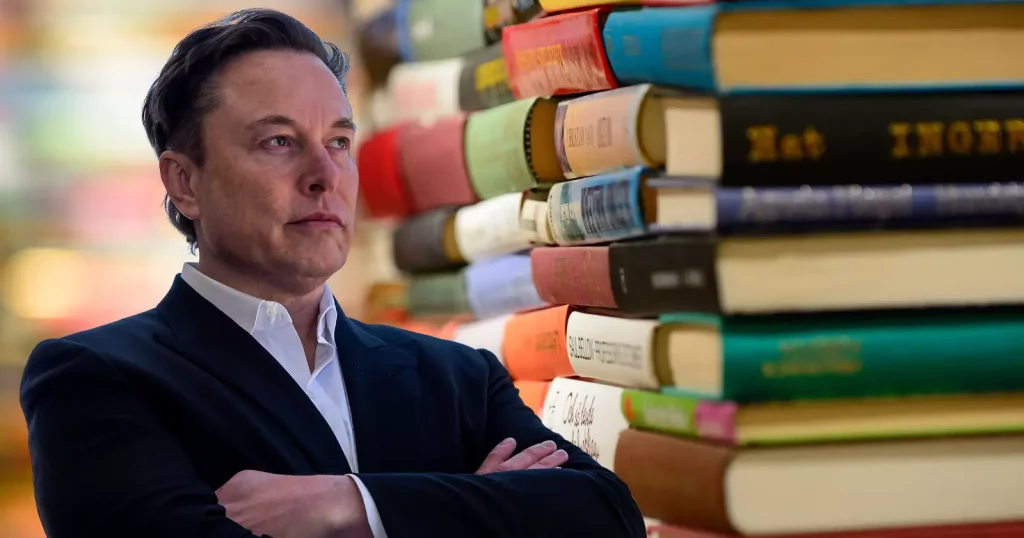
In this article, we are going to discuss Elon Musk’s favorite books and understand their impact on his personal and professional paths.
Elon Musk has been highly appreciated for his breakthrough work with companies like Tesla, SpaceX, Neuralink, and The Boring Company, together with his audacious vision for the future of humanity. Be it the colonization of Mars, sustainable energy solutions, or changing human interaction with artificial intelligence, Musk has become synonymous with bold ideas and futuristic thinking. While most of his success is ascribed to business ventures, personal interests, especially those that have been attached to books, play an important role in making him the way he is regarding innovativeness.
Musk has repeatedly spoken about the books that influenced his thinking and how reading shaped his intellectual development. Despite being a busy entrepreneur, Musk is an avid reader who spends hours consuming information across various genres: science fiction, history, engineering, and philosophy. Indeed, some of the most important lessons learned by Musk in his career are linked to the books that have influenced him.
What would be Elon’s favorite book? In this article, we are going to discuss some of the books Musk has admired during these years, understand their impact on personal and professional paths of change, and then deep-dive into insights he’s given about reading books in general and what they mean in his life.
The Power of Reading: Musk’s Approach to Learning
Elon Musk doesn’t do anything the normal way, and this carries on his approach to reading and learning from that reading. As a young lad in school, a voracious child reader, sometimes devouring four or five volumes daily. At a tender age, Musk admits to spending many waking hours engrossed in voracious reading in various subjects. So far, such has ranged from subjects such as science and technology to fantasy to history.
Musk doesn’t read for entertainment; he reads to understand and to find answers to problems. Musk has spoken numerous times about how reading has shaped his career and has especially influenced how he approaches engineering and problem-solving. Due to his relentless reading, he self-studied subjects ranging from rocket science to artificial intelligence. As Musk would have it, books are the perfect tool for problem-solving since they give insights into how others have faced and solved challenges and, even more so, new ways of thinking about complex problems.
Musk often refers to the fact that he can “compress” knowledge from books into actionable insights. He has also talked about how he would rather learn directly from textbooks, manuals, and other educational resources than from traditional classroom settings. This self-directed learning has been a cornerstone in his life and has helped him apply much of his reading to real-life problems.
Elon Musk’s Favorite Books: A Deep Dive
1. The Hitchhiker’s Guide to the Galaxy by Douglas Adams
Another well-known favorite of Musk is Douglas Adams’s The Hitchhiker’s Guide to the Galaxy. This piece of classic science fiction has been something to which Musk has repeatedly returned in interviews as a formative influence on his sense of humor, worldview, and approach to problem-solving. It’s a curious combination of nonsense and philosophy, following the misadventures of Arthur Dent, an ordinary fellow who finds himself whisked up into an interstellar odyssey following the destruction of Earth to make way for a hyperspace bypass.
For Musk, Hitchhiker’s Guide to the Galaxy is more than fun; it’s a different look at the universe. The wit and absurdity somehow rhyme with Musk’s unconventional, imaginative, deeply philosophic ways of considering the world. Musk mentioned several times that when discussing the challenges in his ventures, that famous line from the book “Don’t Panic” kept him going. Undoubtedly, the book combines lightheartedness with depths of philosophy, something that would later show in Musk’s outlook on life and work.
He has also drawn topical comparisons between the book’s theme of space travel and his mission at SpaceX. If anything, Hitchhiker’s Guide to the Galaxy speaks to the limitless possibility of space travel, and Musk himself has spoken similarly about creating a multi-planet-bound civilization.
2. The Lord of The Rings by J.R.R. Tolkien
Surprisingly, another of Elon Musk’s favorite books that has had a strong impact on his psychology is The Lord of the Rings by J.R.R. Tolkien. Musk once referred to this epic fantasy trilogy simply as one of his favorite books. The story of Frodo Baggins and his companions undertaking a perilous journey to destroy the One Ring in the fires of Mount Doom has entranced generations of readers- and for Musk, it certainly is no exception.
Musk has talked about the motivational themes of overcoming, heroism, and sacrifice in Lord of the Rings, many of which similarly reflect his actions as an entrepreneur. The group of people coming together to tackle a common achievement against the phenomenal odds placed has been similar to various challenges Musk was facing with his companies. From building Tesla’s electric vehicles to making space travel more economically viable with SpaceX, Musk has often found himself in the underdog position, much like the characters in Tolkien’s world.
The book also demonstrates Musk’s fascination with myth and storytelling, which he believes play an important role in inspiring and motivating people. On a certain level, Musk’s ventures could be called his quest for greatness, and therefore, The Lord of the Rings keeps in mind that hope, leadership, and determination should never be allowed to falter.
3. Einstein: His Life and Universe by Walter Isaacson
Musk looks up to the big brains of science and innovation, and among the books he has is Einstein: His Life and Universe by Walter Isaacson. This biography is about probably the most influential scientist in history, Albert Einstein, and gives great insight into this physicist’s life, work, and legacy.
To Musk, Einstein is a kind of apotheosis of intellectual curiosity, creativity, and persistence. Musk says he was drawn to Einstein’s disregard for conventional problem-solving and imagination. The book is a deep dive into how Einstein’s radical theories, particularly the theory of relativity, helped shape the understanding of the universe and how Musk connects that type of thinking to what is happening at his companies.
Musk has said that he draws inspiration from the way Einstein approaches problems and risks in his quest to know. In Musk’s interpretation, this book reminds him of the importance of independent thinking in pushing the frontier of what is possible.
4. Benjamin Franklin: An American Life by Walter Isaacson
Another biography that Musk has mentioned as a major influence is Walter Isaacson’s Benjamin Franklin: An American Life. One of the Founding Fathers of the United States, Franklin was a political leader, inventor, scientist, and philanthropist. The many sides of his life and his achievements have inspired Musk to look upon Franklin as a role model for the modern-day Renaissance man.
It narrates Franklin’s life from his poor beginnings in Boston to his vital role in the American Revolution and his inventions, such as the lightning rod and bifocals. Musk said Franklin’s diverse interests and accomplishments, combined with his pragmatic thinking in service of innovative ideas, were qualities he admired and tried to imitate.
Everything, from electric vehicles to space exploration, reflects Musk’s commitment to problem-solving and societal contributions. One of the most impressive features of Franklin’s personality, which Musk admires, is his ability to balance scientific inquiry with political leadership.
5. Structures: Or Why Things Don’t Fall by J.E. Gordon
Musk has also suggested reading Structures: Or Why Things Don’t Fall by J.E. Gordon, which explains many things about structural engineering. That’s important, considering that Musk is a visionary entrepreneur educated in physics and engineering. Thus, comprehending the inner workings- of the building principles- anything from a rocket, a car, or a skyscraper- played an essential role in Musk’s career.
The book is intensely deep in its discussion of structures and the science of materials, which is suitable for Musk, who solves problems based on simulations formed in his mind. Musk credits his basis of understanding structure and design to readings like Structures or how he comes to think by overcoming the tough systems he was doing.
6. Zero to One: Notes on Startups, or How to Build the Future by Peter Thiel
Peter Thiel’s Zero to One: Notes on Startups or How to Build the Future is a more recent influence on Musk’s thinking. Thiel is a cofounder of PayPal and Palantir and has made his dent in the world of technology. Musk has often spoken about how Thiel’s philosophy has helped him crystallize his approach to entrepreneurship.
Zero to One underlines that the world needs innovative, unique businesses that can do something different for society rather than just emulating what already exists. Musk fully agreed with Thiel’s observation that the only companies that will succeed will be those oriented toward building something really new, and it is this philosophy that has driven Musk’s initiatives, from electric cars to space exploration.
Musk himself has called Zero to One a valuable resource for understanding the nature of startup success and the necessity of taking on big, audacious goals. Thiel’s focus on creating monopolistic, world-changing companies fits in nicely with Musk’s ambitions for Tesla, SpaceX, and his other ventures.
How Musk’s Favorite Books Reflect His Character
Elon Musk’s favorite books offer a fascinating insight into his personality, character, values, and approach to business and life. Musk is known for his drive to challenge the status quo and think beyond the conventional limits of possibility. His reading choices reflect this tendency-books that span a wide range of genres, including science fiction, history, philosophy, and engineering, but all with a common thread of intellectual curiosity and a desire to improve the world. These books reveal how Musk’s personality has been shaped by the lessons they impart and influenced his thinking on innovation, perseverance, and leadership.
Musk’s eclectic reading list is a reflection of his complex character. It speaks volumes of how he draws from the vast spheres of technology, science, human experience, and history that have given him lessons that other great creators of their times have written. Books such as The Hitchhiker’s Guide to the Galaxy and The Lord of the Rings point out that Musk is about creativity, humor, and the value of a vision. These books don’t just entertain; they make the reader think about big questions of existence, the role of humanity within the universe, and what the will to persevere through hardship means. Musk often refers back to the optimism and problem-solving themes in these works as central to his approach to life.
What is most striking about Musk’s favorite books is how many stress the importance of thinking outside the box and defying conventional wisdom. It is in their nature that Musk has always tried to disrupt industries, whether with Tesla and its electric vehicles, SpaceX and its private space exploration, or Neuralink and its work on improving neuroscience. In all the books Musk goes to, this mindset is often used: the revolution of something existing and/or pushing the limit. For example, The Hitchhiker’s Guide to the Galaxy may be full of silly humor but contains a deep philosophy of questions about life, the struggle over understanding the unknown, and the value of questioning the status quo. Musk himself is an exponent of questioning the received wisdom to progress.
Similarly, the biographies of people such as Albert Einstein and Benjamin Franklin reflect Musk’s inspiration from the power of curiosity, learning, and relentless ambition. What he most admires about these figures is not their scientific and intellectual achievements but their courage to finally establish a new paradigm. Musk’s admiration for these historical icons reflects his respect for critical thinking against the tide of mainstream ideas and skepticism.
Elon Musk’s favorite books also reflect his long-term view of humanity. Works such as The Lord of the Rings and the biography of Franklin stress the values of persistence, team spirit, and leadership toward fulfilling a highly ambitious and, in effect, impossible dream. These lessons hit Musk’s heart, particularly in light of his mission to make humans a multi-planetary species and ensure a sustainable future for humanity on Earth. Whether running a team at SpaceX or meeting those targets that made Tesla cars more affordable, Musk continued to draw from that well of endurance and long-term thinking. His favorite books remind him that to create monumental change; it would take determination, collaboration, and the facility to envision a future that others couldn’t see.
The Bottom Line
Elon Musk’s favorite books are not a matter of personal taste; they are a window into the thinking of arguably the most visionary entrepreneur of our age. The books he has praised offer insight into his thoughts, what he has learned, and what principles guide his work. From science fiction to biographies of historical figures, each has molded Musk’s worldview and informed his approach to tackling some of the world’s most complex challenges.
Musk’s reading habits underscore the importance of lifelong learning and intellectual curiosity in achieving success. Whether he draws inspiration from the pages of The Hitchhiker’s Guide to the Galaxy or the biography Einstein: His Life and Universe, Elon Musk’s favorite books remind us that the key to shaping the future does not lie in innovation per se but in the knowledge and ideas inspiring it.
