
What’s Next for SpaceX? Future Projects in Space Exploration
In this article, we look at what’s next for SpaceX, focusing on its future projects in space exploration.
SpaceX was founded by Elon Musk back in 2002. It upped the ante in space explorations and their commercialization in less than two decades. For its monumental records SpaceX now covers Mars-it becomes synonymous with the future in space. While the company has already achieved great milestones, such as launching the first privately funded spacecraft to the ISS and developing the world’s first reusable orbital rocket, its journey is far from over. SpaceX’s ambitious plans for the coming years will surely evolve not only the space industry but also the future of humanity in space.
In this article, we look at what’s next for SpaceX, focusing on its future projects in space exploration. From Mars colonization to commercial space travel and beyond, SpaceX is charting a course that could reshape our understanding of space and our place within it.
The Starship Program: A Gateway to Mars and Beyond
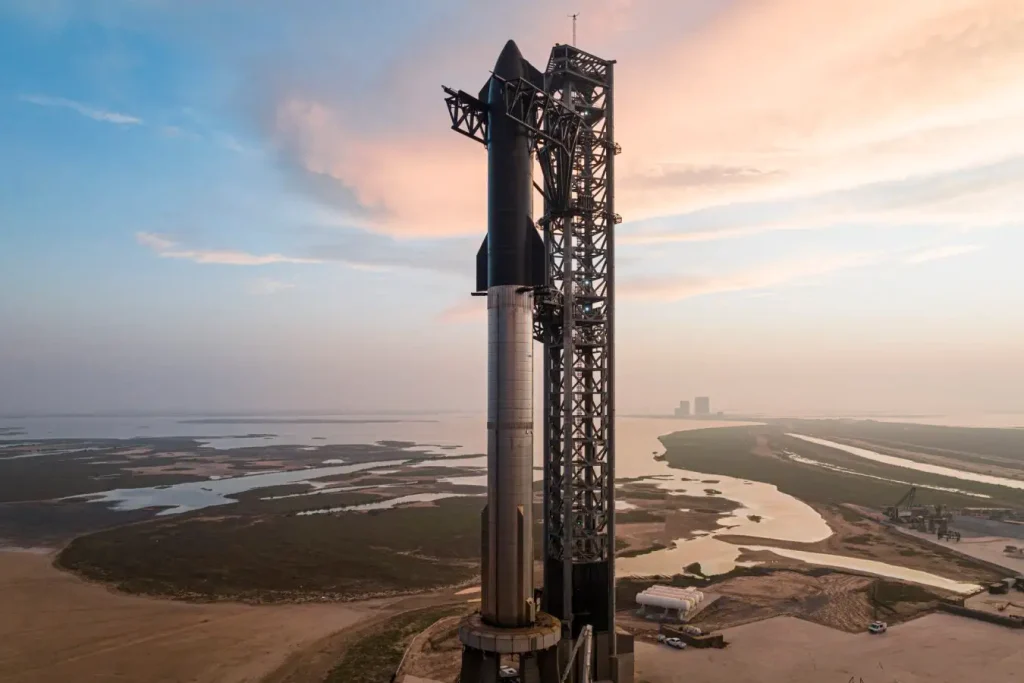
Arguably the most ambitious and exciting project SpaceX currently has in the docket is the Starship program. It is the first fully reusable spacecraft designed to transport humans to Mars and beyond. SpaceX wants to develop a spaceship that will transport large groups of people and heavy cargo to the Moon, Mars, or even farther from Earth.
Starship is the centerpiece of Elon Musk’s vision to colonize other planets. It is a next-generation spacecraft that should be fully reusable. This will cut the cost per flight and increase flight frequency. Each spacecraft will carry up to 100 passengers and cargo to enable high-duration spaceflight. Starship is a general-purpose vehicle whose uses range from deep space missions to interplanetary travel to even space tourism.
Development has been a serious undertaking for Starship since the formation of SpaceX. Substantial development and extensive testing of the spacecraft have been done so far. Starship is a two-in-one vehicle comprising the first stage, otherwise known as the Super Heavy Booster, and the second stage, the Spacecraft itself. The Super Heavy booster will provide thrust during takeoff, while the Starship will be meant for deep space.
SpaceX has already conducted several test flights of Starship prototypes, and each test has brought the company closer to its goal. The company plans to conduct more test flights of Starships, including orbital, in the near future.
Lunar Missions: Artemis Program and the Role of SpaceX
Artemis Program
While Mars is the main goal of SpaceX, lunar exploration is also part of the plans. In 2021, NASA chose SpaceX to develop the human landing system HLS for the Artemis program to return humans to the Moon by 2024. The program tasked SpaceX with modifying its Starship design for lunar landings.
The Artemis program is a huge step in humanity’s return to the Moon, aiming for a sustainable lunar presence. Success will depend highly on SpaceX’s contribution to the program in designing and building a spacecraft that can take astronauts from lunar orbit to the Moon’s surface and back.
The SpaceX design of a lunar Starship will be larger and more capable than the lunar landers of the Apollo program. Capable of taking crew and cargo to the lunar surface, it will be designed for several different environments, including the South Pole on the Moon. It is expected that the SpaceX lunar Starship will also play a very significant role in NASA’s plans for utilizing the resources of the Moon.
SpaceX’s Starship for the Moon
SpaceX’s Starship for the Moon will inherit most of its architecture from the basic Starship designed to go to Mars. Still, it will be modified to face the peculiar difficulties of lunar missions. Other spacecraft modifications include designing the craft to survive extreme temperatures and radiation at the lunar surface. Also, the capability of docking with the Gateway space station orbiting the Moon to act as a staging platform for missions on the lunar surface.
Success with SpaceX’s Starship on lunar missions could open the door to human space exploration. A presence on the Moon will provide NASA and its partners with experience that will be important for future missions.
Starlink: Revolutionizing Global Internet Access
Another major project upon which SpaceX embarked is that of Starlink. it involves satellite internet intended for the most underserved, remote portions of the planet. The Starlink venture is meant to provide long-term finances essential for Musk’s ambitious spaceflight activities.
Starlink is a constellation of thousands of small satellites in low Earth orbit. It is designed to provide fast, low-latency internet coverage to almost every corner of the globe. Unlike traditional satellite internet services Starlink’s satellites are positioned much closer to the planet’s surface, enabling faster and more reliable internet connections.
Going well over their deployment, for 2023, SpaceX has launched 3,017+ and is still progressively growing. Starlink has already been internet-wirelessly enriching the world since it was born. It connects non-urban circles in the rural United States as well as parts of the world using its constellation. This has deep implications for education, healthcare, and economic development in areas that have been underserved by traditional Internet service providers.
In the future, the global network established by Starlink may become crucial for SpaceX’s space exploration missions. Revenue generated through Starlink services could finance the development of SpaceX’s next-generation rockets and spacecraft, including the Starship program. Further, Starlink may be employed for communication support for future missions on the Moon and Mars, enabling astronauts and mission control to stay in contact even when they are far from Earth.
Commercial Space Travel: Space Tourism and Private Space Stations
SpaceX is also well-positioned to be one of the emerging leading players in the space tourism industry. Elon Musk has long envisioned a future where space travel becomes possible for the general public.
Arguably, the most noticeable success was the Crew Dragon spacecraft, which has transported astronauts back and forth from the ISS. None of these has stopped SpaceX from taking to private citizens on a trip to space in Crew Dragon.
In 2021, SpaceX launched the Inspiration4 mission, a historic mission that sent an all-civilian crew into orbit. This mission’s success has been a huge milestone in the development of commercial space travel. After Inspiration4, SpaceX will continue to offer more commercial spaceflights.
Moreover, besides space tourism, SpaceX has brought to the limelight a concept of private space stations. Such space stations could serve as research laboratories, hostels, and other forms of entertainment. The Starship will have a place in transporting people and cargo to these privately owned stations due to its big capacity and deeper space capability.
Looking Ahead: SpaceX’s Long-Term Vision
Making Life Multiplanetary
The long-term vision for SpaceX goes way beyond Earth’s orbit. In a nutshell, Elon Musk’s vision for the company centers on making life multi-planetary. Musk has always said that the ultimate objective of SpaceX is not to develop space exploration alone but to guarantee mankind’s survival beyond Earth. He dreamed someday, human beings would visit, live, and work on Mars and other moons or even far-off planets.
Elaboration of Technologies
Elaboration of technologies that can involve the possibility of interplanetary travel would certainly include most of the critical features defining the long-term vision of SpaceX. The Starship program is being developed with the aim of manned deep space exploration. It can take many people and cargo to Mars, the Moon which is very important in Musk’s long-term plans. The goal is to make space travel more affordable and accessible, enabling rapid and frequent missions to other planets.
The presence of humans on Mars will be subject to many different challenges. Such challenges will be overcome through continued work by SpaceX on Starship and other innovations. These include life-supporting systems and advanced propulsion technologies.
Increased Deployment of Starlink Satellites
Besides a mission to Mars, another important part of its long-term vision is the increased deployment of Starlink satellites. SpaceX tries to turn some pages toward making future space mission communications possible with connectivity. It will be crucial for Starlink to keep men on Mars in touch with Mission Control back on Earth. It will also be important to support data transmission from future space stations and research outposts.
As SpaceX continues to push boundaries, its feats will form the cornerstone of a time when space travel a daily part of humanity. With every milestone in the development of Starship and Starlink, SpaceX knows how to extend the limits of what is currently possible.
The Bottom Line
SpaceX’s future projects about exploring space are very exciting and ambitious. This ranges from Mars colonization to exploration of the Moon, commercial space travel, and connecting the Internet worldwide. With Elon Musk’s vision of making space travel inexpensive, effective, and accessible, the industry is already transforming into a whole new dimension.
